
Fusion and Confusion … how to blend characters from two different series into a new series.

I’m half way through the rough draft of a new book with the working title “Wilty Zeebo and Jackson Toad: Space Hobos” …

and I decided to share a bit with you about the process involved. For starters, it’s a brand new sci-fi series, but readers of my previous series will know the characters’ backstories and readers who are new to my books with this series will not. So how do I handle that? I want to avoid spoilers whenever possible so that they find the previous series enjoyable. This is tricky, and I think in some ways impossible. The characters have certain predetermined abilities and lives that cannot be ignored. Of course, it’s my hope that readers will figure out the timeline in which I wrote my books because I drop Easter eggs from many of my previous books in subsequent books, so it makes sense to go through them in order. But on the other hand, readers may be coming to  the characters deserve an introduction, so, while I normally don’t believe in Introductions that break the fourth wall before a novel, I do believe in breaking the rules from time to time, and here’s how I’m planning to introduce these characters to the reader before the thing gets rolling:Jackson Toad.Jackson Toad Stetson is a minor character from “The Stetson Jeff Adventures,” a six-book series I wrote with my friend Justin Fike. We’ve always used the catchall phrase “action-adventure-comedy” to describe the Stetson Jeff books genre, but they are our attempt at a contribution to a genre I’d call The Great American Tall Tale, which is not a genre according to Amazon, so we were at a loss when it came time to categorize the work for publication, like when the Smithsonian tries to find a place for the skeleton of a skunk amongst the bones of the ancient behemoth lizards. Stetson Jeff ought to be judged against revered characters such as Paul Bunyan, John Henry, George Washington, Johnny Appleseed, Betsy Ross and anybody else who ever appeared in an educational film strip, those characters who never really did the things that my elementary school teachers said they did: chop down cherry trees faster than a chainsaw and refuse to lie about it, invent apple pies and railroads, even design the American flag, and so on. No, sir! They did much more than all that for this great nation! Stetson Jeff, written in the first person, utilizes a great deal of embellishment, so you know it has to be true even if it isn’t factually accurate, which sets the tone for how Jackson Toad got his name, a point which I have been working toward steadily for an entire paragraph now.

Jackson Toad first appeared in a short story called “A Very Stetson Christmas,” which Justin and I wrote to bridge the gap between the first trilogy and the fourth book (not knowing at the time that there would ultimately be six.) In this story, Jeff Stetson tells the reader about his nephew and explains that his name was “supposed to be Jackson Road because he was conceptualized perhaps slightly out of wedlock by a month or so in the bed of a Chevy S-10 on the dirt road that did not have a name but was headed in the direction of Jackson, Mississippi, if you kept on going right through a couple other states, but you couldn’t because the bridge was out before you got to the next town, and then anyway the nurse misspelled his name when she typed it in the birth certificate because the T is right next to the R.” I assure you, dear reader, that the above is not a spoiler. Stetson Jeff stories are famous for Jeff’s humorous, rambling asides, which is pretty much the only thing in the Stetson Jeff books, aside from the bits where he gets kicked in the head and the places where plot jerks forward like the second-hand of a fake Rolex. Still, Jackson Toad does play a role in the final chapters of the last Stetson Jeff Adventure, Denouement in Dallas, and if I said any more about that, this Orientation would become a spoiler for the other series.

After the Stetson Jeff Adventures were completed, I wrote seven short stories involving Stetson Jeff characters and paranormal occurrences, jammed them into a volume called Close Encounters of The Stetson Kind and published it before I had a chance to second guess myself about the quality of the short stories, and in retrospect (or “in retrograde,” as Stetson Jeff would say) I wasn’t going to second guess myself anyway, because I don’t do that, which is why I keep publishing books all the time instead of wallowing about in the fear that it isn’t ever going to be good enough. As my editor Michael Lee says, “You just don’t give a shit, do you?”

He meant that as a good thing. At least that’s how I took it. Far too often in this life, giving a shit stops people from doing shit. Heroes in Tall Tales don’t give a shit, they eat stacks of flapjacks as big as a butte, so why should I care? They’re pretty good, as you’ll see for yourself, because I decided to share one of the short stories from Close Encounters of the Stetson Kind called “No Quarry for Old Stetsons” with you. For the sake of this book I will call it the “Prologue” because it was intended to bridge the gap between the Stetson Jeff Adventures and the ensuing fusion experience. It’s an hors d’oeuvre or a palate cleanser. It’s the final word from Stetson Jeff, it is his version of “Hiyo Silver, Awayyyy.” It’s all we have to explain how Jackson Toad went from east Texas to wandering the stars. 

I also don’t believe in Prologues, but now that we’ve done half of a thinly-disguised Introduction, I’m waist deep in useless front matter and rule-breaking shit-not-giving, I might as well keep going. 

Now, having Jackson Toad appear in outer space from his origins in a sequel to a Texas-style tall tale isn’t really fusion yet, not until we add a character from another series. Enter stage left …

Wilty Zeebo.

Unlike Jackson Toad, whose origin story as told by Stetson Jeff contains a bit too much information about where and when his parents had intimate relations, Wilty Zeebo just appeared in The Satchel Pong Chronicles, specifically book two, Satchel Pong and the Search for Emil Ennis, at the beginning of chapter 28. He appears out of thin air.

I was writing along one day and decided that Antoinette Xho needed an apprentice, so I gave her one and named him Wilty Zeebo. At first he’s a dunce. He doesn’t know how to write, nor what wattage or a generator are. He’s such a dunce he doesn’t even know what a dunce is. He is as blank a slate as can be. If you ever want to see an example of a time when an author has spent zero time thinking about a back story for a new character, Wilty Zeebo would be exhibit A. I dumped him into the story like a pile of wet clay and breathed life into him, whoosh. I do not remember doing it this way, but the evidence is in the negative space all around his character development, and I certainly don’t remember thinking much about it at the time. (To be fair to myself, there are some comments in the story about how various people are just joining up with Satchel Pong’s little clan out of nowhere, and so Wilty is just one of those that I gave a name.) Regardless of his complete ignorance of anything related to constructing or using a wireless (radio) set, Antoinette takes him under her wing. As to his provenance, the story only notes that “She remembered the day he walked into camp. He was alone and starving, to be sure, but even so, he looked as though he were just out for a stroll. Like he knew dinner would come to him as long as he kept his spirits up. She knew he had promise.”

That’s his entire back story. We never learn anything about his parents, land of origin, nor how he survived on his own as a young child in the wilderness before he found Satchel Pong and the rest of them. Wilty himself didn’t have much recall on events prior to his arrival, he is ignorant of his own history. 

As for Wilty having “promise,” I myself had no idea how much promise he would show when I casually dropped him into the story. Almost anything I could say about Wilty’s role in the last three and a half books of the series would be a spoiler, so I’ll leave you with that. As it turned out, Wilty had so much promise that here he is getting a spin-off fusion series of his own, five years after Emil Ennis was published. You will notice that Wilty will make many references to things on his home planet which those who’ve read Pong will recognize, but it works just as well in this novel to not recognize them and instead to experience them as Wilty being weird and coming from a weird planet. Which he does.

While Jackson Toad comes from the tall-tale series set on planet Earth, Wilty comes from a series that’s part steampunk, part fantasy, part sci-fi, set in a world of my own creation, although it is quite unlike almost anything from any of those three genres on their own. Because Wilty has appeared in three and a half books, he now has a weird and rich back story. 

But we must never forget that Wilty Zeebo appears out of thin air. In another world, he might have been both a priest and a king after the order of Melchizedek. By the time we’re done with him, he might be more like Cotton-Eye Joe: we will not know where he came from nor where he did go, and if it hadn’t been for Wilty Zeebo, some of you might have been married long time ago, although I don’t think you should blame him for that. If you sit around and read books and don’t get out and meet interesting people, that’s a possible consequence. The obvious solution is to join a book club. I digress. I feel that there’s both an innocence and a mystique to this character I trust you’ll enjoy. Satchel Pong’s story ended but I never felt that I was done with Wilty, and I hoped he’d get along with Jackson Toad. 

I hope at this point you’re excited about the fusion project. Let’s be real, I hope you’re excited enough to go get the first book in the Stetson Jeff Adventures (Beatdown in Bangkok) and the first one in the Satchel Pong Chronicles (Satchel Pong and the Great Migration) and give them a try. Check out my bookstore page (www.adamgfleming.com/bookstore) and if you’d like a free listen to the first Stetson Jeff book on audiobook, send me an email at agf@adamgfleming.com and I’ll send you a code to listen free!

Adam G. Fleming, an Author Who Walks the Fine Line between the Absurd and the Sublime.

Welcome!

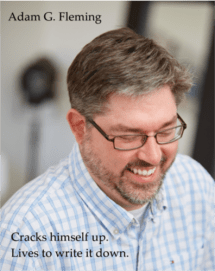
Hey there. I’m Adam G. Fleming. More about me in the “About Adam G. Fleming” tab. Obviously.

Read about my various books and order autographed copies in the Bookstore, and find ISBNs for Audiobooks in the Audiobook tab. Sign up for my email list by getting yourself a Free book.

Contact me if you need help writing, editing, publishing or marketing your own book. My wife and I have a whole thing we do. It’s all here, and whatever isn’t here, there’s a link, so click around.

Year of Wonders by Geraldine Brooks

Fans of historical fiction in 2022 will love how easy it is to dig into this book about the plague in the Midlands of England in 1666. It’s a tight, beautifully written masterpiece and with Covid (mostly) behind us, we’ll relate to the feelings that people in England had when they didn’t know how to control or prevent the plague from spreading. We lost a lot of friends and neighbors during Covid, but it’s hard to imagine losing fifty percent of our town!

I believe this book can even be a part of your healing journey if you’ve lost loved ones during Covid.

There are a lot of things to love about this bestseller. The story has great pace and timing, the characters are as real as it gets, and there’s a lot of interesting historical stuff scattered in. Probably the hardest part of the book, the most emotionally difficult for me anyway, was reading about how the plague came to town on a bolt of cloth that a tailor was using to make clothes for people. As the tailor dies, he urges his landlady to burn everything but since his patrons have already paid for their clothes, and they’re relatively poor folk, they are loathe to burn so much valuable cloth. The townspeople come and pick up their new items after he expires. It reminded me of the ignorance we saw in our own times when it came to the spread of Covid. People ignoring the most basic warnings.

But there are also stories of immense courage and self-sacrifice, too.

It’s a beautiful book, perhaps the best one I’ve read in a year.

Indie Book Review April 2022

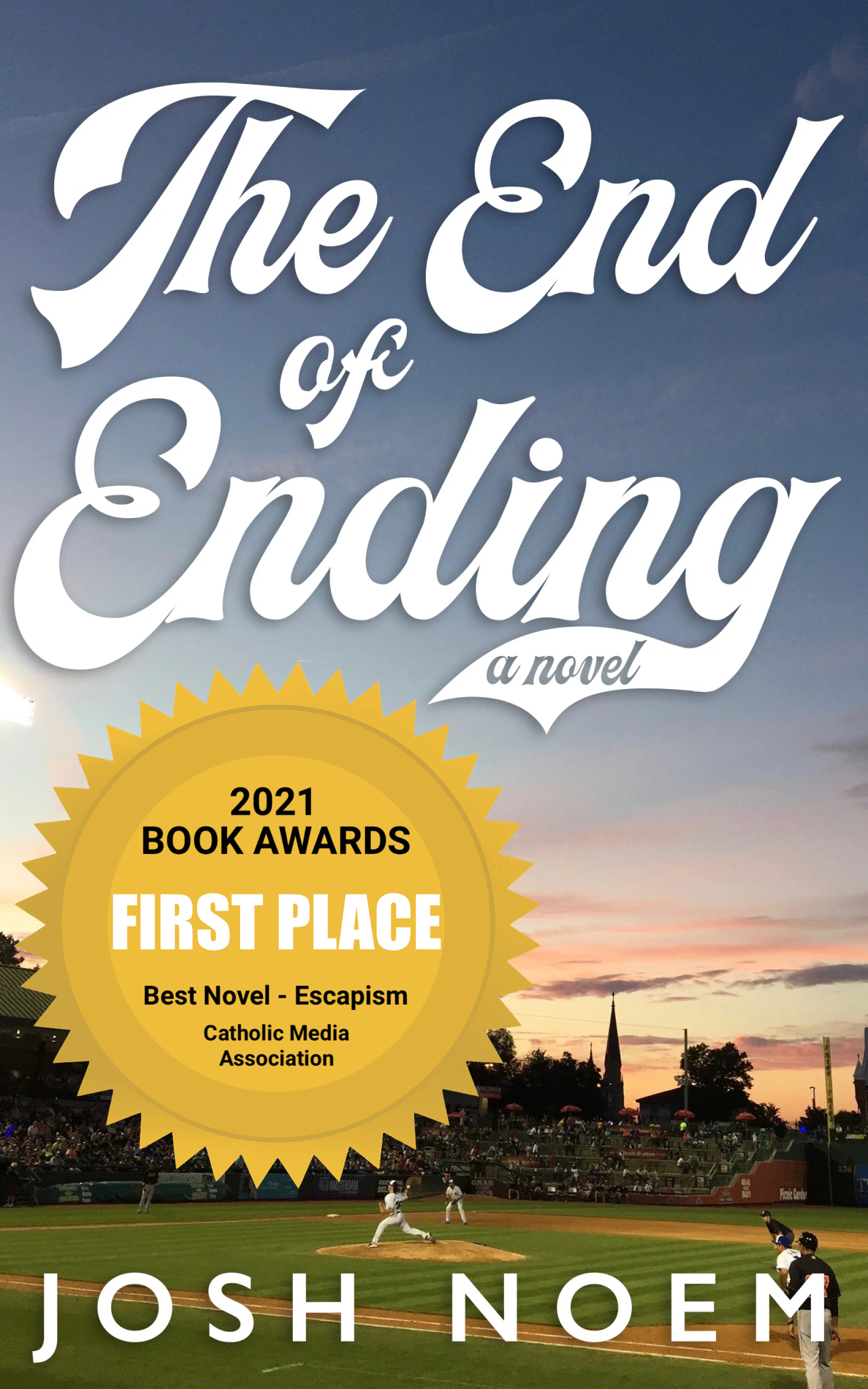
The End of Ending by Josh Noem

Josh Noem is the editor of The Grotto (grottonetwork.com) a publication of Notre Dame University, and a student of theology, a graduate of Notre Dame’s MDiv program. I met him about a month ago at the South Bend Public Library where we were both showing our books at a convention. He was kind enough to gift me an autographed paperback copy of his award-winning debut novel, The End of Ending.

This is a novel about baseball, beer, and a love that is stronger than death. Noem includes an interesting cast of characters in the fictitious city of Andover, Indiana, including a courageous Native American brewer from South Dakota, several Catholic priests, (some drunk and some not,) some confused coroners, and some migrant field laborers. The unique mix of characters represents Indiana (and South Dakota) well, and Noem holds his mystery lightly, like a sparrow or a tiny frog cupped in his hands, not wanting to open his hand to the world too quickly.

I’m not sure what to say about the overall plot except that there might be zombies… But not the kind you probably think of if you’re a Walking Dead fan. Noem’s vision of an afterlife on earth is beautiful, shimmering like a rain-soaked diamond under the lights; a baseball diamond, that is.

For Noem, baseball is a metaphor for eternity and beer signifies community, and I affirm both of these ideas. However, I was a little disappointed, since the cover image is a photo the author himself took of the South Bend Cubs in action at Four Winds Field, to find that there wasn’t a single professional baseball player among the cast. I guess the cover led me to believe I was getting something like Bull Durham or The Field of Dreams, but Noem fell short of making this a real baseball story.

That’s not so much a criticism as a warning to readers; if you hanker for baseball as I do in March, before the White Sox go on a 1-9 slide, this isn’t that book. But if you love baseball and beer, and you love literature more than the former two things, then you’re in the right place. If you’ve lost a loved one and are looking for a glimpse of hope that you’ll see them one day in the Great Outfield Beyond, The Park Without a Fence, then this might just be the book for you.

Next time Noem comes out with a new novel, I’ll buy it. I’m hoping it has more baseball in it, and I wouldn’t be surprised if it does, because if there’s one thing I know about Josh Noem, he is a baseball fan. But whatever he decides to do, it is bound to clean up even more literary awards, because Noem is a slugger. Here’s a link to Noem’s website. And a link to The End of Ending on Amazon.

Book Review: The Drifters (1971) by James A. Michener

I’ve read a lot of books by James A. Michener, who became famous in the 1940s with the popular success of his book South Pacific, which was turned into a Broadway musical. He went on to write at least forty more novels, and I’m sure I’ve read at least half of them.

I thought I was done reading Michener because even though I enjoy historical fiction a lot, he has some weaknesses. For example, he’s not likely to kill off a character, when perhaps he ought to. Twice in this book, I thought the narrative would be stronger if he allowed one of his main characters to die. He works with strong archetypes, and he seems to think that he needs those archetypes to explore all the topics and themes from cover to cover. Perhaps he’s not wrong about that, but since the characters are archetypes, they are easily replaceable, as Michener has shown he can do when he writes a saga that spans millennia rather than a couple of years.

A few months back I was in my local bookshop and I purchased two books about the hippie era from 1958 to 69 or so. One was by Jack Kerouac, which I reviewed two months ago.

What I appreciated about Michener’s take has to do with his generational perspective: he was 60 years old in 1967, and he was trying to understand the new generation. He wrote the Drifters as the late 60s was happening. He was a journalistic novelist trying to figure out what made these kids tick. What did they like about their music? Why were they dodging the draft? Something his generation couldn’t comprehend. It’s one thing to examine the Boomer generation from the perspective of Gen X, or for Millenials to try to understand their Gen X grandparents, but it’s very interesting to get a take on that era from someone who came from the G.I. generation.

Although Michener was only born 8 years after Hemingway, it would be a mistake to think that Michener was of the same generation as Hemingway; Hemingway was part of the Lost generation. To give some context, the Lost generation had similar generational values to the Gen X generation. Michener was born only 8 years after Hemingway but outlived him by 36 years. What would Hemingway, who died in 1961, have thought about the late 1960s? What would he have written? Would he have understood the kids better from a visceral place, where Michener was only able to put it together intellectually, by listening closely to his subjects?

Why the comparison between Hemingway and Michener? Both writers GEEKED OUT about Pamplona. A central theme in The Drifters is courage. The draft dodgers weren’t evading Vietnam for lack of courage, and Michener illustrates this candidly in his take on the running of the bulls.

What about a comparison between Kerouac (1922-1969) and Michener? Both born technically in the G.I. generation, Kerouac was very much a tail-ender, and like someone born in 1979, who has elements of Gen X and Millenial in their makeup, Kerouac seems to relate better to a later generation… or, like someone born an entire generation too early, was out of place in his generation and related much better to the Boomers.

The Drifters is one of Michener’s best novels. He worked hard to understand the Baby Boomers’ generational values, and articulates them well through the voices of his archetypes, even as he marvels at how different they are from previous generations. As a storyteller, Michener sometimes fell into the trap of the rabbit trail and the geek-out, and I’d say this is a spoiler but I still have 80 pages to go and Michener could still surprise me at the end, but when the opportunity to kill off a character presents itself, he gets T-Rex arms and backs off with the hatchet.

If you want to understand the Boomer generation from the perspective of someone who came before them, this novel is an excellent 800-page adventure that, after setting the stage in the United States, drifts from Torremolinos, Spain, to the Algarve region of southern Portugal, north to Pamplona, and on to Africa, touching on the current vibes in Mozambique and Morrocco. For lovers of history and geography and intergenerational understanding, it is A+. A fast-paced plot with twists and surprises, it is not.

Book Reviews Jan 2022

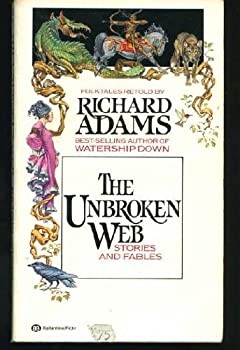
The Unbroken Web by Richard Adams (Author of Watership Down). A fantastic collection of Stories and Fables from cultures around the world, retold by Adams. I love how he set each story in a scene so the storyteller has a specific person as an audience, and often a dialect as well. The book contains 20 stories. If you enjoy reading folktales and like mythology, this book is for you. FIVE stars.

Madame Bovary by Gustave Flaubert. There are always classics I haven’t read, and I try to get to a couple of them every year. The satirical nature of this book crosses 150 years and a language translation pretty well, and while perhaps the wit is more elusive for me than Mark Twain’s work, Flaubert still resonates. I appreciated the footnotes and recommend people get a copy with additional contextual help. If you consider yourself a well-read reader but haven’t read Flaubert yet, this book is for you. Four and a half stars.

Scarlet, by Stephen R. Lawhead. This is the 2nd book in Lawhead’s trilogy retelling of the Robin Hood myth. I really like the direction he took with the myth, and the second book is all right, although he switches to first-person for much of this book and it doesn’t feel as strong as book 1. If you’re a Robin Hood fan this series is for you; several of the recent movies about Robin Hood haven’t been worth watching. Someone should make a Robin Hood movie from Lawhead’s version. I think I’ll keep my eyes out for book 3 and see how he wraps it up. Four stars.

Job: A Comedy of Justice, by Robert A Heinlein. Science fiction with a main character moving through life trying to get home to Kansas, but ends up shifting to alternate universes over and over, constantly finding himself with US Dollars that no longer work. Since the main character is from a version of the USA that is very religious, he tends to have conservative worldviews and the book digs into concepts of heaven and hell. I enjoyed the premise at the beginning and felt it went off the rails later on. If you like sci-fi and have a fascination with end times and the rapture, this book is for you. Three stars.

INDIE author. Blood Sapphire’s Revenge, by Dr. Bruce Farmer. I listened to this on Audiobook while walking, which isn’t my preferred method but I wanted to give this indie author a shot on my reading list, as I know his publisher. Here is a book for Tom Clancy fans. I felt the description of guns and so forth overbearing at times, the bad guy is holding a semiautomatic blah blah — he’s shooting at you, who cares what kind of gun. The author relies a bit too much on coincidence for characters to bump into one another. There’s a fair amount of graphic content, both violence and sex. If you’re a Tom Clancy fan and like to know exactly what kind of weaponry people are using and how they are training, and you like it gory, this book is for you. Go for a print version rather than audiobook, the sound quality is solid but the reading is stilted. Three stars.

How do I publish my book? Episode 1.

New Authors often email me with questions about how to publish their book.

Here are my answers to a few questions that were sent today.

How do I get an ISBN number (how to get one, how much it costs, how long it takes)?

The answer to this is also the basic answer to all the other questions below! If you’re a first time author I suggest publishing through KDP Amazon. It’s easy to set up your account, connect it to your bank, upload your product and your cover design, and so on. Well, it might not feel easy the first or second time, but let’s say it’s streamlined and you just have to follow the steps in order. They may feel confusing or complicated and you may feel stuck at some point in the process, but at least you can trust that the steps are all listed in the right order, so if you troubleshoot one step at a time you’ll get there. If you’re stuck in part of that process, email me and ask me to write a second blog about whatever the problem is.

As far as the ISBN goes, for authors who create an author’s account with Amazon, one of the coolest benefits is they’ll give you their own ISBN. It doesn’t allow you to publish on other platforms, it’s really only for Amazon use. But if you’re writing a book to share with family and friends primarily, and you just want to upload to a place where you can sell and print copies all in one place, you can use this platform and get an ISBN immediately, and better yet, it’s free. There will be a box that you check when you go through the process. It says something like “give me a free ISBN” Check it. Keep moving. There are reasons why serious authors might want their own ISBN. You’re probably not at that point yet, (I have 12 books out and I’m not at that point) so my advice is don’t worry about it. You can always un-publish your book from Amazon and redo it later with a different ISBN if you really need to.

Yes, it’s possible to buy your own ISBN, or even a block of 10 of them, but that’s a lot more hassle, it costs money and might take more time, too. It’s a good solution for publishers. If you’re only likely to make one book, stick with Amazon and save yourself the headache.


* barcode (similar questions to previous line)?

Once you have an Amazon ISBN you need to leave space on your cover design for the barcode. There’s a template you can download which will give you exact specs for the cover dimensions and image resolution. It will show your graphic designer exactly where the bar code will be printed (and how big it will be) once you upload your cover file. When Amazon prints it, it will be automated. It’s always in the lower right corner of the back of your book.

While I’m on the topic of the cover design, I’ll add that if your book is under a certain amount of pages, they will not include a spine in the graphic design — don’t try to put writing down the spine. The template will tell you what that cutoff is. I always wait until my book is formatted for printing to tell my cover designer the last thing she needs to know: width of spine according to how many pages are in the book. So you may be ready to upload your Word-doc paperback MS before you have a completed cover design. That’s okay. Save what you’ve uploaded and return later. You’ll want to select a normal format for your book, 6×9 or 5×7. I suspect that if you have a wonky size the third-party printers might take a bit longer to fulfill orders. Also it will just fit people’s bookshelves better if it’s standard.

* pricing* ?

Amazon will guide you with this during the setup process as well. You will be able to set your price on ebook and paperback and even hardcover now. You will be able to buy your own copies of the book at wholesale price and they will tell you what that wholesale price will be once your manuscript is uploaded, as the page count is the key factor in the printing price. I don’t mind sharing that my cost of books ranges from around $2.50 per copy for my shortest one up to about $5.50 for my longest book. I usually shoot for a retail price of about 3x of the wholesale cost for paperbacks, because when I sell through a local bookstore they take a cut too and that way I still net around 30% of the retail price.

How much should you sell a book for? Ah. I think people will often pay $15 or $20 or even more for an autographed paperback if they know the author or are meeting them at a special event. You may want to price the e-book at $0.99 if you just want readers, $2.99 if you want the best deal (70%) or $9.99 even if it’s a short book just because it’s unique. I can’t really guide you on this much more than that.

How do I officially copyright the book to [my name]?

Again, you can go to the copyright office for this, but you really can just put (c) with the year and your name. There’s a concept called Poor man’s copyright, and I think some authors still do this: print the MS, mail it to yourself, don’t open it. Just file it. This way there’s a government issued date on the file (the postmark date from the Post Office is a dated, official government document) and if there’s a question in court you can have the judge open the file and see that you had the material before anyone else did, with the government’s proof on it. I don’t know if this holds up in court but it seems like it ought to. Yes, you can send the MS to the copyright office if you’re really concerned.


* “All rights reserved” paragraph* I’m no lawyer so I’m hesitant to say what you need. What I would do is grab a book in a similar niche published by a major publisher, and copy what they did. I do this for my interior layout too. If you’re really worried someone will steal your work, don’t worry. That’s a lot more rare than you think. Are you getting the picture, I might be kind of sloppy about these things? Yeah. Maybe I am.

name/location/website of printer*?

I’m not sure if this question is where to put the name in the manuscript, or if the question is asking if I know a good printer. Answer: Publishing through Amazon it’s all taken care of. You don’t need to find a printer at all. Amazon puts some of that information in the back of the book themselves, it will say “Printed in the United States.” When you set up a title on Amazon, they will have it printed by a third-party. It is print on demand. This means you can get 1 copy or 10,000 for the same price per copy. The difference is in shipping! If you buy 1 copy the shipping may be $3 to $6 but if you buy 10,000 it will be pennies per copy. Rule of thumb: I used to buy 200, now I buy 20 at a time. Start with a smaller amount. If you sell it out quickly, that does NOT mean you should buy more the next time, because as a first-time author selling your first 50 copies to your friends and family is great, but the next 50 are going to be harder to sell. So if you sell 50 in a week, don’t go and buy 500. You’ll most likely have them in your basement gathering dust within a year, and don’t say I didn’t warn you.

date of publication (month and year or only year?)… Yeah, only year is necessary. Put the month if it is significant to you.

and anything else you normally do on the copyright page — or elsewhere in the book in the realm of “boilerplate”?

Again, I don’t think I’m the best person to answer this. If you want boilerplate find something from one of the biggest publishers that’s in a similar vein to your work; if it’s fantasy find a fantasy book and see how they do it. Or maybe check out there for other peoples’ more thorough blogs on that specific topic.

Maybe this blog isn’t that helpful. I haven’t googled all the links, like where is the copyright office. I did put in the KDP link, so start by setting up your own account and many things will become clear; you can always come back to this blog and say– what did Adam say about this next step? My main point is, most of it isn’t that hard, you just look things up and wrangle your way through and do it one step at a time.

What about Audio books?

Aha. I added that question. Maybe you don’t realize that more than 30% of books are now consumed in audio format. If you want to connect with readers who prefer audio and you don’t want to mess with figuring out how to record it… Lucky for you, I am now offering my services to read audio books. I have the equipment: a small studio, a great microphone, and the proper software to edit the audio files. I will help you upload it to your own Author’s Republic account, which is kind of like the Amazon of audio books. Author’s Republic lists your audiobook on 50 platforms and collects the cash from each of those platforms and dumps them all into your pot. They keep 30%.

Good luck publishing your first book!

Book Review: December 2021

The Dharma Bums, by Jack Kerouac (1958)

I’ve never read Kerouac before, but his book On The Road is considered groundbreaking in American lit., and Kerouac coined the term “Beat Generation”. He fits somewhere between jazz and rock-n-roll. Decided to pick this one up for $2 at Fables Bookstore. It was shocking content for the time, because there’s a brief 0rgy scene. By today’s standards, not explicit. After reading this book I do recommend that serious writers read at least one Kerouac novel. His prose is beautiful, and even though the plot is nonexistent and character development is minimal, Kerouac is a master of the stream of consciousness style of writing. Not for you if you don’t like stuff without a plot.

The Yiddish Policemen’s Union, by Michael Chabon (2007)

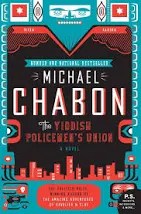
I got this one from my brother-in-law Brandon, swapped him for another book. I have read Chabon’s The Amazing Adventures of Kavalier and Clay previously. This book has an interesting premise. What if many of the world’s Jews were sent to Sitka, Alaska, following WWII, in a sort of ghetto environment, waiting to be allowed into other nations after 50+ years? This is a noir-ish detective story with a mix of non-religious Jews, as well as Chasidic and Tlingit communities and a chess theme. I appreciated the unique cocktail that mixes up, particularly the sidekick character Berko Shemets, who is half Jewish, half Native American. I would really have liked to read more of Chabon’s notes on the back story which he alludes to frequently. If you liked Chabon’s other work you’ll like this too. Try Kavalier and Clay first.

The Dharma Bums (Penguin Classics Deluxe Edition)

Work in Progress: Satchel Pong Chronicles #3 Sneak Preview

Things are moving rapidly. After sitting in my files for a couple years, I finally released Satchel Pong and the Great Migration on April 5. (Satchel Pong Chronicles, book 1)

Satchel Pong and the Search for Emil Ennis (book 2) is now uploaded to Amazon and available for pre-purchase, as of yesterday. It releases May 3.

I am in the process of drafting he third book in the trilogy, which doesn’t have a title yet. Here is an excerpt from the work I did on it this morning, (April 20, 2019) presented raw and unedited (though there will be few typos if any). I enjoyed what I got today so much I wanted to share it early! If this piques your interest, scroll back up and hit the links to purchase books #1 and 2! (Note: in the manuscript this is presented in italics, to show that something is happening on a sub- or super-conscious level.

Spoiler alert: it’s worth a brief note, but I don’t think this excerpt gives much away, really. I think it’s isolated enough from the plot that about the only thing you’ll know after reading it is that I did not kill off Emil Ennis, the title character of book 2. At least not yet.

From Satchel Pong Chronicles Book 3:

Emil saw things. Someone had installed a third eye, right in his forehead, tapping through his skull. He could see backwards along the alchemical connection, which ran into the longitudinal fissure with nodes connecting to both hemispheres, then dropping through the corpus callosum and, painfully, shoving other nerves aside, raw, drilled into his medulla. Nothing, none of the nodes touched his speech; he would be able to articulate nothing of what he saw or felt with this eye. At least not initially. He would have to forge new connections, synapses.
After this brief introspection, his eye swiveled about and looked out at the world, the skin on his forehead as thin as an eyelid, light came through to the eye beneath, painting upside-down pictures of everything from people and machines to the Great Furla itself upon a retina— these were upside-down images his brain had not yet learned to invert. Those tiny leaves pointed toward the ground, roots pointed skyward. He looked down at the sky, where his third eye could see the waves on which voices carried when a Wireless set was in use. There were other waves, too, carrying things he never imagined existed. There were colors he had never seen before. And all was upside down. He would have to forge new connections to turn these scenes right-side up, and other connections to be able to verbalize anything he saw. But he knew what he saw, and saw what he knew— and things he did not know. Even those things, he felt in his core, in his chest, in his toes, in his liver— in his marrow. He felt them.
It would be alchemy that gave him this ability, he thought. An Alchemist has been at work on me again, and has embedded another mod. May that Maria Rheon be damned by the Furla— !
— Or, it is a manifestation of the Way.
Taleb O’Bandery?
— Look again, Emil Ennis. Look inside.
Emil looked into himself again. Deep in the medulla, the lizard brain… there, he found it. The chameleon, that’s a sort of lizard, isn’t it, isn’t it? It lives in some far-flung land— doesn’t matter— There it was, as a totem, an unspoken power— a wisdom he possessed, lightly, lightly, wisdom held on fingertips— a knowledge around which a tail curled— It was the insight to turn one’s skin into the color of the surroundings, to reflect light from behind you to a viewer in front of you, to wink out like a light, to be shrouded, to shroud oneself as though under an eyelid, to wink slyly and to have others find oneself invisible. Can this be taught? Or must it be discovered for oneself?
— It is neither, and both. You must be exposed to the concept, but you must find your own way to a silence beyond visibility.
What is happening now?
— Now, you should rest. You will need meat from a large beast; a donkey, a yak, or caribou. You need blood to replenish your marrow, to replenish your own loss of blood, to revive the very air in your lungs.
Am I dying?
— Look inside and see if you are or not.
The chameleon-eye swivels, looks, winks. Life winking out? No. The wizard-lizard within winking wisely.
Taleb, bring meat. Goose is greasy, it’s not ideal, but it will work in a pinch. Tuna. That is a thick beast, and food from my home. Tuna— toro nigiri would be best, I feel it, I know it— I crave that dish, the fat from a good tuna belly. But Goose will work. Fat, meat, raw flesh, liver pate. Foie gras would work— goose or duck—
— Sleep, Emil Ennis, rest and sleep. Food is coming.
Yes. I will sleep. Then I will awaken, and eat and revive a little.
— If you must preserve yourself, simply disappear for a while.
I don’t think that is needful. I just need to sleep, sleep a while, to sleep—

Encouragement as Confrontation

I was talking to a friend this morning who was admitting that perhaps he isn’t very good at confrontation. He’d prefer to avoid conflict, and admitted that it may come from a certain theological background (he grew up Mennonite).

In the course of the conversation, I said to him something like “You know, encouragement IS a form of confrontation.” I surprised myself with this statement, because I’ve never thought about it this way before. But I’m convinced that I’m on to something!

When we’re having a tough time, we need to be encouraged because without some outside help, we’re going to get stuck in negative self-talk. Encouragement tells us we can go another mile in the marathon. It tells us we can get back up, dust ourselves off, and get back on a horse. Someone who encourages us confronts the self-defeating negativity and says “NO” to it.

We may not see it as a confrontation because it may be preemptive. Ideally, we’re getting encouraged even before our brain says “I want to quit, I want to give up, I want to be comfortable.”

When was the last time you told someone they are pretty? (And really meant it.)

“Oh, I’m not — I’m not as pretty as so-and-so.”

You know you’re getting enough encouragement when you can just say “thank you” after being confronted with some truth about yourself. Encouragement is just an exercise in confrontation that says “I believe in you. You can do it.”

Get lots of mini-interventions, it’s like health food for your brain… and your soul. And give them out, too.