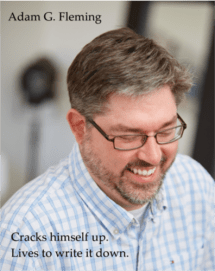

The following is an excerpt from a longer e-book I’m working on which should be published by the end of May, 2017:
If you are a leader who wants to make a positive cultural impact, you’ll need to manage your energy and focus your consumption so that you can leverage time differently. With the time you free up, you need to exercise your empathetic and creative muscles so that when the time comes to re-articulate values to your team or community, you’ll be able to do so with excellence. This is the formula for positive cultural impact.
For the sake of this blog post, I’m going to focus on why you need both empathy and creativity working in tandem, like iron and carbon coming together to form steel. The coming e-book will give people handles on how to do it.
Empathy without creativity results in a message that gets you less attention and lower retention. Think of this as sermonizing without excellence in storytelling. For example, a recent blog by Michele Perry in praise of the film “The Shack” notes that “…many Christian films miss the point of being films and are actually thinly veiled sermons that dismantle whatever creative effectiveness their story line might have had.” In context of my theme, Michele has pointed out that whatever empathy Christian filmmakers (previous to The Shack) may have had, (I have no doubt that their hearts ache for humans to find our Way,) has been compromised by poor storytelling, favoring empathy above creativity rather than melding the two. I have not yet gone to watch The Shack, perhaps because I’ve become wary of films branded as “Christian” for exactly the reason she pointed out. In fact, most of those films fail to get my attention. I won’t go see them. Fortunately for The Shack, reviews like Michele’s are going to buoy it along, and I’m now interested in seeing it.
Now let’s consider the flip side. What if your attempt to impact culture is heavily weighted toward creativity but has little sense of empathy? It’s no surprise to anyone that artists are interested in influencing culture; their motives may be rooted in empathy or something more self-serving, for example, fame or self-glorification. In the Modern Art movement, artists began speaking to an ever-narrowing, increasingly esoteric group of elites. Most of my friends scorned artists like Thomas Kinkade throughout our twenties, but as I’ve thought further about his work, I realize that his idea was to communicate to a much broader audience who wanted to look at something pleasant, welcoming, relaxing and inviting, images of cottages where they could imagine themselves at peace. And Kinkade cared about people who wanted that. Those same people never felt that Modern and Postmodern artists cared one whit about whether or not they “got it.” Kinkade’s commercial success was looked down upon by the elite postmodern highbrow gallery artists, but out of a certain empathy he spoke to a broader audience, using a great deal of creativity in the process, and earned both attention and a certain level of retention, too. Here’s a blog that’s a couple years old, but was published three years after his death at age 54, noting that his signed and numbered lithographs are likely to continue increasing in value. Long term, that remains to be seen, and monetary value is only one way of measuring retention. Another way to look at it is that if the monetary value is going up, that means people are keeping their lithographs — which means they’re either speculating, or they genuinely continue to appreciate his message and the values his work spoke about. Some might put his work in the same camp as those cheesy Christian movies which do a poor job of storytelling, but the truth is that Kinkade was a masterful painter whose technique may have been formulaic, but whose storytelling moved a generation of people to buy his paintings when other painters struggled to get any attention. (And when it comes to formulaic storytelling, Hollywood is all about that, so formulas are not a problem. Experimenters can search for new formulas, but there’s nothing wrong with using a recipe whether you’re baking chocolate-chip cookies or telling a story.)
I know, that’s a lot about art, and may mislead you to think that you will have to make a movie like The Shack or paint like Kinkade to make a positive cultural impact in your family, on your team at work, in your nonprofit organization. Not so. Use what you have, both exercising and building the muscles you have for empathy, and also those for creativity, so that your message will be driven by caring for others and delivered in a way they can appreciate, enjoy and remember for a long time.
Going back to the iron and carbon makes steel analogy, a good steel is both stronger and more flexible than either of its two main parts. The fusion of empathy and creativity will give your leadership both strength and flexibility, too.
Soon I’ll be releasing a how to course online, complete with a longer e-book, videos, a workbook, and a place for community.
Note — if you’re in the Goshen, Indiana area and would like to sit in on the live audience video taping of the course instruction, that will be happening at Art House on April 18 at 7 PM, and is free for the public to attend.
Second note — if you’d like to get a copy of this e-book when it’s done, please email me at adam.fleming.lifecoach@gmail.com, reference this blog post, and I’ll put you on the email list for a FREE copy!
 Adam G. Fleming