Intentional Community 3: redundancy

Outside of extreme circumstances (criminal behavior) you should have someone in your intentional community you anticipate having a lifelong relationship with.

This rattled the adults who lived in the Intentional Community where I grew up, Plow Creek Fellowship, when one of their members and leaders was found to have perpetrated sexual abuse of minors. This came out long after we had left, and even then my parents were upset (and wondered if their children had been abused — we hadn’t). Everyone expected that this man would be part of the Community for life, and this wasn’t a case where forgiveness was going to ever bring enough reconciliation that he could stay around. Some things just cut you off for life. It’s over. You don’t get a second chance, even if people forgive you, they can never breathe freely again. They should not be expected to try. I’m in favor of forgiveness, but reconciliation is a long, slow process, and the hope for complete restoration in this case is not realistic if not impossible.

So you have someone you trust. But just one someone is not enough. You need a web of relationships about which you’re intentional. Sooner or later there’s a good chance one of them will screw up. Perhaps not in a way as extreme as the example I cited (I sure hope not) but there are many other ways relationships disband. Sometimes you contract or agree for a certain length of time, and when the time’s up, one person is ready to move on. Sometimes you screw up (oh, yeah, that happens too) and the other person doesn’t give you any graciousness, and off they go.

Knowing which people you expect to share your life with for the sake of your own accountability, support, and encouragement is great. Having a decent set of expectations with each is also helpful. And having some friendships you anticipate keeping for life is important too. Mentors who are twenty years older may die — perhaps at a very inconvenient time. Having some people around your own age, and as you grow older having the humility to put some younger people in your web, are good ways to counteract the potential that we all have of losing our favorite guru, oracle, mentor, coach, trainer, etc. The whole thing is all about humility. Now, at age 41, my oldest client is 71, and I’ve been coaching him twice a month, almost a year. He loves it! There are not many left in the world who have more experience than he does, so he’s not coming to me for my experience. He’s coming for my expertise as an asker of curiosity-based questions.

Let people in your web be curious about you, and let them in. Even if one or two of them goes off the deep end, if you have a big enough web, you won’t regret letting people into your life. This is called redundancy. Businesses get it: have two computers in case one goes down. Painters have three cans of paint on hand when you need two, in case you spill one. Grocers have a generator on hand in case the power goes out and threatens to ruin your freezers full of meat. Leaders have redundancy in their web of intentional relationships.  This is the opposite of lean manufacturing. Taleb talks in his book Antifragile about how redundancy makes you antifragile. That is to say, when you experience small shocks, you are more than resilient, which means you don’t suffer damage, but instead you actually grow. Redundancy is a huge part of being antifragile, so if you want to grow when times get tough, this is incredibly important.

Writing Thursday, #3 in the series: Improving your abilities in Language

Getting better at Language:

Last week I talked about sharing authentically from your heart, and some differences to think about between being a poet or musician and a novelist / screenwriter / actor.

When it comes to sharing your heart, you have to understand the language (context as well as tongue) that you’re writing for. So how do we get better at understanding the language of our medium and genre?

As with heart, more isn’t necessarily better when it comes to vocabulary, either. Still, the tools at your disposal should be as broad as possible. So the building block of language is vocabulary.

That’s an easy 5- minute exercise to come up with: Read through the dictionary for five minutes every Wednesday. Look at five words. Note the ones you didn’t know before and make a flashcard for each. Don’t assume you’ll really learn the new word without looking at it seven times.

But the bigger question is how to grow in your ability to understand the Language — that is the context of your medium and genre — so that you’re well prepared to write in that realm.

This points to an exercise that is a lot longer than five minutes. The only way to immerse yourself in the language of landscape painting, for example, is to look at a lot of great landscape paintings, preferably in person. The only way to immerse yourself in the language of mystery novels is to read a lot of them — and the best ones you can find.

I wrote a literary novel. My editor asked at one point whether I was trying to write the Great American novel, and I said, “why would I try to write anything else?”

Eco says that “When the writer (or the artist in general) says he has worked without giving any thought to the rules of the process, he simply means he was working without realizing he knew the rules. … Telling how you wrote something does not mean proving it is “well” written. Poe said that the effect of the work is one thing [heart] and the knowledge of the process is another.”

It’s also been said that while Joyce was writing long, flowery sentences, Twain used sentences such as “It was a man.”  Part of using language effectively, both in the details of vocab selection and in the broader scope of speaking the language of the genre and medium, is to begin to walk unnoticed by the reader.

A popular Facebook meme says that you should never make fun of someone who speaks broken English — it means they know another language. At my son’s soccer games, the parents of Spanish-speaking families like to cheer for J.J., but they call him Yay-Yay. I love it, because I love that they root for my kid as well as their own, I see in this cheering the heart of a dad who wants all the boys to succeed. So the point is, when you’re not fluent in language it’s just going to be obvious. It doesn’t mean that you can’t write something with heart, so you shouldn’t stop writing any more than those dads should stop cheering. No! Keep going! In fact, it may give the writing a naive quality that somehow sings and may become considered great even if your language isn’t flawless. But on the other hand, fluency in context when you’re making something is worth working towards and attaining if you want to improve your abilities. Studying the language in terms of vocabulary is the building block, but reading the best literature in the category is understanding the culture that language fits into: and the best thing about this is to see how writers restrain themselves in terms of how they use the vocabulary they have, which certainly exceeds what they use: What you’re not saying is often more important than what you are saying.

Fusions in the Void, Part 12. Summer and Winter: A new spring

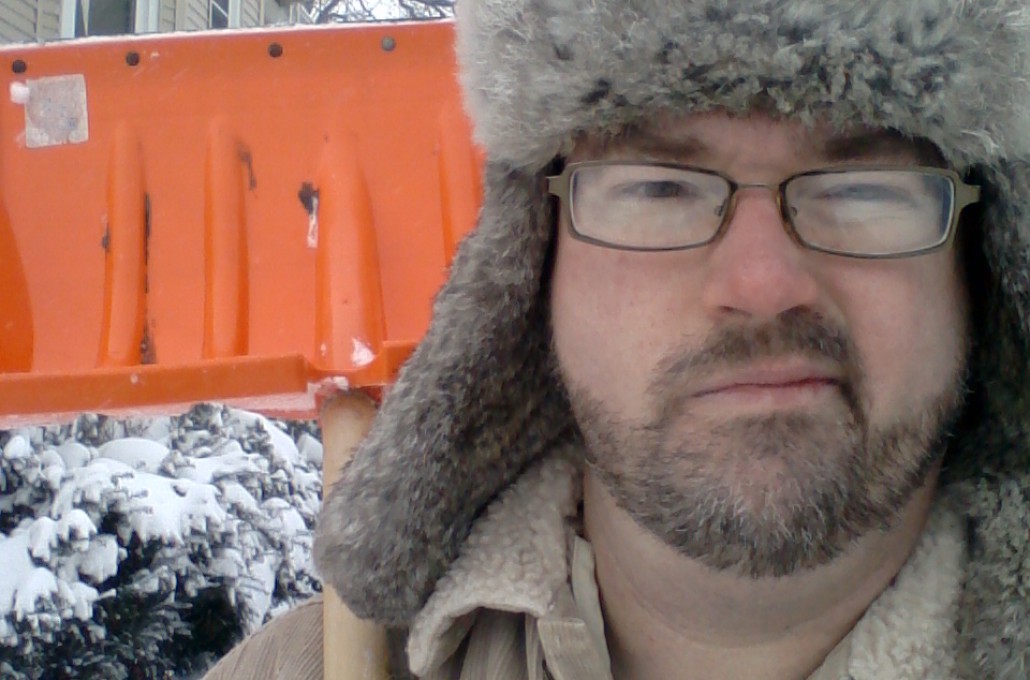
Fitting that this blog is set to release on December 1. I know that winter officially begins later, but December 1 is that day you wake up and say, “Well, I can’t fool myself any longer into thinking it’s fall.” I love autumn, I never really want it to go away. I don’t particularly like winter:

get out your shovel and dig
get out your shovel and dig…

There are days I don’t like summer, either. Our house doesn’t have air conditioning, but by controlling when the windows are open or shut we can keep it fairly cool, around 72 degrees, except for on the really hot and humid days we suffer one or two weeks of every August. Then, I sit in my office with drops of perspiration rolling down my back and wish for October to come again.

Natural cycles are like this. Even in the desert the rain comes, just enough to sustain cacti or lizards. Then, times and places change, nothing’s ever static. There are places in the world where drought is this unexpected thing. Australia and California are prime examples of places that were breadbaskets but are struggling for water.

In the Void, nothing seems to be happening. It’s emotionally and spiritually dry like summer, or dead and cold like winter, never quite what you wish it was. That’s the definition of being in the void, or in a valley experience. The imagery is palpable when you feel this way; you can’t function even in what you know you can do well because your locks are frozen, the air hurts your lungs (And Christians sing “this is the air I breathe/ your holy presence, living in me”). But what if it’s painful to inhale anything? What if you feel like you’re sweating?

In the void, God is fusing summer and winter to create a new spring. Even though fall is what I like best– fall seems like a less rainy springtime– we all hunger for spring. New growth, new life. Looking back at the beginning of this series, we talked about that passage in Genesis 1:2 where the spirit of God is hovering over the waters. The Spirit is calculating the perfect blend for us: a sun just far enough away that in winter we have a tolerable temperature, but in summer as well. On average, the temperature of springtime, we have a perfect blend of hot and cold, summer and winter, that gives us the spring time needed for new growth.

When it’s hot, or cold, in a spiritual or emotional way, it’s our invitation to remember that spring is delicately balanced as the world tilts so that things will grow. Hang on to that reminder. Summer, you can sweat it out. Winter can’t last forever. Spring will come again, because God knows how to Fuse stuff in the Void of your life.

(this series began October 3– see the archives in the left-hand toolbar to work your way back to the beginning.)

Intentional Community 2

I was raised in Intentional Community (capitals on purpose). What some might consider a cult or commune was really a group of people considering carefully how to live together. In our case, the Intentional Community was called Plow Creek Fellowship. It was a Christian church (Plow Creek Church) and a communally owned, shared living environment of 150 acres or so, some farmland along the creek and some upon the bluffs, in the countryside of Bureau Co., Illinois (Plow Creek Farm) with six or seven houses (some of them housing multiple family units) on the farmland and several houses in the nearby village (Tiskilwa). Most of our communal life was lived on the farm property. We children attended public schools in Tiskilwa.

The impetus for this degree of intentionality at Plow Creek came from a study of the book The Acts of the Apostles, chapter 2, which talks about people sharing food and goods in common. People who joined Plow Creek did so with a great deal of deliberation on both the part of the existing community and the prospective members, because joining meant sharing money and property in a common purse. It meant, essentially, a commitment that felt lifelong, even though it turns out that was rarely the case. Many of the members, like my parents, came from the Jesus Freak movement of the 1960’s, they were hippies who didn’t smoke weed or wife-swap. Love was free, but there was no Free Love. Oh, and they were pacifists. Yeah… That was popular in rural Illinois. You bet.

I have seen people being intentional about what sort of community they engage in, and give their lives to, to an extreme degree. Once you joined, decisions were made by consensus (though I won’t say there wasn’t coercion from time to time).

Communes have fallen out of style– there are significant social problems within the system, not the last of which is the problem of slackers (once people have joined, you’ve got to feed them even if they don’t produce much, whether cash or crops, which is an economic drain on the system. You’ve voluntarily and permanently laid down the choice to give out of your own personal abundance and generosity, which is a good thing to do, until you don’t have any recourse not to do it). It’s hard to hold people accountable if you’ve got so much grace invested in the relationship that you can’t just, well, ex-communicate them. And if you’re not willing to end the relationship, you’re sort of stuck in an enabling vortex. Another problem is the relative isolation. It’s sort of what they wanted, but in rural Illinois, there weren’t many neighbors who could relate to the lifestyle and ideologies Plow Creekers espoused. Perhaps for another day: intentional communities: open or closed?

One thing I did learn is that if you want to be a leader who finishes well, you do need some sort of intentional community. You need commitment to a group of people who can hold you accountable, you need an out for extreme circumstances, and if you need to duck out for some reason then you need to get plugged back in right away somewhere else. The key is that you’re the one being intentional. Others will inevitably not be as committed to you as you are to the concept, if you’re truly embracing it.

We see this now in the coaching world. Those who want authentic community and are willing to be intentional about it will sign a coaching agreement, with regular check ins not only for their own growth but for the progress of the relationship with the coach as well. This can be done with a peer coach (taking turns) or a professional coach, a mentor or “Paul” and a downward mentor or “Timothy” and with a variety of other people you commit to sharing your life with.

People are sometimes surprised to find that I have a coach too. (This probably stems from the misunderstanding people have that ‘life coaches have it all figured out and will tell you what to do with your life’ which couldn’t be further from what coaches really do.)

I work every month with Mark. Mark’s a professionally trained coach and we exchange peer coaching. I also have another friend named Mark who isn’t a coach at all, but we’re best buddies and we’re intentional about talking about the temptations we face. I have another friend named Jonathan who meets with Megan and I monthly to check in with us on our growth as artists, as a couple, and as people who are serious about community. We pay Jonathan. I meet with Ralph for discipleship (I’m the “Timothy”). I meet with K. C. twice a year for coaching supervision through an organization that I contract with. In total that’s five people, two of whom get paid for working with me and three who don’t. Two of them live in my town, one in another part of the state, and two in Colorado. It’s not unusual for me to have a meeting almost every week with at least one of them. This isn’t anything like Plow Creek, yet everything about it reflects how I grew up: you don’t float through life on your own. Not because you’re trying to be a slacker: in fact, precisely the opposite.

By the way, Megan and I attend church regularly. None of the people I mentioned attend the same congregation we do. It’s sort of ironic but right now I have a lot less formal, intentional relationships within my congregation. I also run a nonprofit and none of these coaches or mentors are on the board. But I’m intentional about communicating with both of those groups too: my pastors know what’s going on, and so does my board. The key is that in every area of your life; from your marriage and sexuality to your career and spiritual life; from the addictions you’re kicking to the dreams you’re pursuing, you’ve got somebody you check in with. That’s how we do intentional community. That’s the whole point of this series. There’s value here.

How to Improve your Writing, number 2.

Happy Thanksgiving!

This is the second in a five week series on how to improve yourself as a writer, with five minute exercises designed to train you in five areas.

Last week I talked about how to improve grammar, punctuation and spelling (but not vocabulary). If you missed it, it has to do with memorization. Fun-fun.

This week, let’s talk about a five minute exercise you can do to work at expressing emotion in your writing.

When writing a novel, play or screenplay your emotional attachment to characters needs to be disguised, embedded in the dialog.

In The Postscript to The Name of The Rose, Umberto Eco notes that “a novelist should not supply interpretations of his work; otherwise he would not have written a novel, which is a machine for generating interpretations.” He notes that Shakespeare works so well because there’s virtually no stage direction to tell the actors HOW the actions are done. All expressiveness happens out of the scripted dialog.

Novels can be written with some sort of agenda behind them based on a sort of activism, but they don’t usually fare as well as novels without a distinct agenda. Atlas Shrugged is a great example of a book that’s been widely read and criticized for its distinct agenda. It’s also just not a very good read. We don’t like to be told what to think when we read a novel. I’m a huge fan of Barbara Kingsolver, but some of her books border on activism. I tend to agree with her concerns for the earth’s ecosystems, and she’s far better than Ayn Rand, but it’s still there. A bit. Many Christian novels aren’t Christian at all, or perhaps it would be better to say they aren’t novels. On the other hand, lots of great novels have Christians in them and they use words like Fuck and Nipples, too. For my part I am not trying to write an adjective (Christian) I’m writing a noun (novel). Whatever adjective one might ascribe to my novel, it isn’t worth much if it isn’t considered a novel.

Eco notes a difference between

“How are you?”

“Not bad, and how are you?”

versus

“How are you?” John inquired anxiously.

“Not bad, and how are you?” Peter cackled.

He points out that the author of the latter has intruded on the story to impose his point of view.

There’s a line between novels and poems in terms of the way words are used to express feeling. I think the same goes for the difference between musical performance and theatrical performance. I’ve heard it said that rock musicians make terrible actors because during a rock concert the musicians express their own feelings and aren’t really able to tell a story any other way, so when they get in front of a movie camera they aren’t really able to avoid interjecting their own point of view in favor of playing a role.

Similarly, the novelist conceals his heart like an actor, while the poet writes with heart on sleeve. The words novelists use construct, as Eco said, a machine for generating interpretations. Poems, on the other hand, are about the feeling of the words perhaps even more than the meaning of the story they tell. There’s a difference between sharing your feelings and telling a story.

I have a friend whose first novel was not very good and I’m discovering why. She told us that she spent far more than half her composition time weeping as she attempted to reconcile her emotions between two conflicting social ideologies: she had people she loved on both sides. And this entire social conflict was her subject matter. The novel would have been better off as a series of poems.

So, when artists talk about growing in terms of sharing a heart-expression, there are certainly some cases when you need to keep your poker face. Kill the adverbs and let the dialog give your reader space to decide for themselves which character they like the most, and which one they hate. You can grow in the Heart area in two directions because it’s a continuum. To the one side there is the musician/poet and to the other side the actor/novelist. Knowing which direction you want to go is important. This doesn’t mean that the actor/novelist doesn’t write and perform from the heart, it just means that their heart is accommodating someone else’s story to empower it by an authentic depiction, while the poet/musician is sharing authentically from their own heart. Novelists must of course write from the heart, often expressed as “write what you know.” If you want to write what you feel, turn to poetry.

If we want a five minute exercise to help us move in one direction — towards personal sharing —  writing a quick poem might work, but I think we’d do even better to write down words that express how we feel about our immediate surroundings. Try doing it in the first person, in the present tense, and go ahead and stack it up with adverbs, feelings.

On a Friday in November I write with cold feet in fuzzy slippers, my scalp itches, I hope my kid didn’t bring home a head lice epidemic. Feeling enslaved to my circumstances but always hopeful too. Thinking about yesterday. Remembering, reliving it: I pace the floor, exalting when the mail comes, my final proof arrives from the publisher. I flip the pages through my fingers, I’m nervous, jumpy already, quickly finding imperfections; that’s why you order a proof, it’s a maddeningly painstaking process, you’re so close to the finish line but you’ve got nothing left in the tank. Will people like it? Will they even read it? Are they interested enough to buy it? Still, here it is, none of that matters, I want to celebrate, enjoying a sort of masculine sensation of accomplishment. My wife wants to be alone. I drink a glass of wine alone, drop into bed with a book, the wind rattles the window behind my head, researching the next novel already, not really taking the time to enjoy the moment. Sadly, I turn out the light. I didn’t really share my moment with anyone, at least, not the way I’d hoped. What’s my problem? Do I not believe that this is good work? I’m sorely tempted to think that royalty checks are the only thing that will impress her.

So now, on Friday, the wind stays close to my office window, the sky all gray, today I wonder again, will they buy it?

Remember, if you want heart stuff, you gotta let it bleed. You can clean it up, edit later.

Now, if you want to go the other direction towards the novelist/actor, take a paragraph and cut adverbs and let the reader interject feelings for themselves. You’re still in the character’s head, but you’re not being emotionally guided in the same way.

It was a Friday. Yesterday Joe’s final proof arrived from the publisher. He had flipped through it several times. He wondered how people would react to what he’d written. Still, there was the book. It had been on a computer screen for months, but now it had weight. That was the noticeable thing about flipping pages, it was half a pound of paper. That and the imperfections. Some of the photographs’ captions were cut off. The editor had more work to do. But it would be done on time for the release date, and that was out of Joe’s hands. He poured some wine. His wife was downstairs, doing some laundry, bed sheets and pillow cases. Joe knew she was angry. She’d found a dead louse and treated her hair, which killed forty-five minutes of her evening, ruining her plans, whatever they were, and they probably didn’t include sex in the first place. He realized she wouldn’t end up celebrating with him in any sort of way, after all. He drank his wine, then got in bed with a book, something he’d purchased with his next novel in mind. It got late; he turned off the light. Now, Friday, not much light still in the November sky. Joe scratched his head and wrote some more. You have to keep writing, they said. So he did.

There’s definitely heart in the second piece, it just comes across differently.

Know what your intended medium expects of artists in terms of how they share their heart, then work to take your writing, painting, lyrics, poetry or acting in that direction. Novelists let their readers decide what to think. Poets invite their readers to feel a certain way.

As Eco said when asked whom of the characters he most identified with, “For God’s sake, with whom does the author identify? With the adverbs, obviously!”

It’s been interesting to try to write the story in two ways, once with a personal, journaling-style authenticity and once with a more detached novelist approach. The second piece still has that authentic feel of a real world, even if it’s fiction. You, the reader, get to decide what Joe’s feeling. (Probably skewed by reading the first paragraph earlier, though!) Take five minutes, writing a story both ways, because a huge part of expressing your emotions is knowing when and how it’s appropriate.

Fusions in the Void, Number 11. Music and Silence.

If you could fuse music and silence, what would it sound like?

The quietest place on earth is a studio at Orfield Laboratories in Minnesota, with a negative decibel reading. It would actually drive you crazy: nobody’s been able to stay inside it longer than 45 minutes. Most people duck out in just a few seconds. You think you want peace and quiet? You really want peace.

In contrast, one of the noisiest places on earth is CenturyLink field in Seattle on a day when Seattle’s beloved home team, the Seahawks, plays football there. It’s so loud the crowd is thought of as a twelfth man, essentially their job is disruption of the opponent’s offensive plays. And it works.

In the Void, the dark night of the soul of our lives, there comes a restlessness. In the Old Testament, King Saul enjoyed hearing a young shepherd named David play his harp. It eased Saul’s troubled spirit (but not so much after he realized David was turning into a rival). On the other hand, Elijah went through a variety of very loud storms (fire, earthquake, wind) and finally in the stillness heard the small voice of God.

If God’s voice is still and small, but God’s words can rock your world so deeply, as though you were in a mosh pit, then there’s some sort of fusion only God can do. It’s a fusion between music and silence. Something spiritually resonant. That’s what you’re looking for when you say you want some peace and quiet, but it’s also what you want when you say you want to listen to some “old time rock and roll, the kind of music that soothes the soul.”

In that void of Genesis before time, God fused all kinds of things as God’s spirit hovered over the water. Now, when your life is dry like desert, you may feel that you’re in the quietest room in the world, about to go crazy, or in the loudest stadium, unable to block out the sound, but somewhere, somehow in the void God fuses music and silence to create a resonating peace. You may feel more like Saul or more like Elijah (neither of them were having their happiest days) but your results are driven by what you’re listening to.

Now, I’m not saying don’t listen to dark, depressing music. And I’m not saying you now have to go find a quiet spot. I’m not entirely sure what I think any random person ought to do. All I’m suggesting is that you may want to be aware that God can create a fusion while you’re in the void. I cannot say how you will or might find it. (You would come up with your own ideas if I was coaching you). All I know is that it is there. It is hearable — or perhaps I should say, it is experience-able, because it is half-silent. You might well hear it while listening to music. You might well hear it practicing and embracing times of silence. If you’re used to doing one, try the other, and look for it. A still small voice, a fusion between music and silence which brings resonating peace.

Intentional Community: Deep, Authentic Relationships

While talking to my friend Joe yesterday he asked me if I could help his organization out in helping people make intentional plans for growth in their organization. Joe’s firm helps nonprofits develop their own leadership from within. One executive he knew had recently been let go by the board, after six or seven years with the company. This executive had asked Joe on four separate occasions to come talk about helping them make a plan, but they never bought in. Now that Executive X is being let go, too late he realizes that an intentional plan would have been much better. The transition will be a lot more painful.

Intentional seems like a redundant word to me, and maybe it should be, but it’s not. Nothing really gets done without intentionality, unless you’re talking about haphazard accidents, and any of those that are good happen because you were intentionally working on something else! You don’t stumble upon the idea for Post-It Notes unless you’re working on new developments in glue.

The same thing goes with community. The first thing you have to recognize if you want to build a community with and for any purpose whatsoever, you’ll have to be intentional.

The law of entropy — I am not a thermodynamic physicist, so this is perhaps inaccurately summarized as the idea that things fall apart — creates the challenge that things in a closed system (like the universe in terms of thermodynamics or like your town or organization in terms of meaningful relationships) will require an influx energy on a consistent basis to make any relationship or group a cohesive one.

In other words, your intentionality is required to counter-act entropy in any community you care about.

The first thing Joe and I had to agree on was the fact that without intentionality, no organization can implement any plan, much less a plan that will develop future leadership potential.

Five days (or six) to becoming a better writer: Day One

My first rule of thumb is if it ain’t broke don’t fix it. In other words, if you are cruising right along with your writing, don’t stop to read this. However, I am assuming to some extent that you’re not cruising or you wouldn’t bother searching articles like this one. Unless you’re not sure:

You may wonder, “what if my writing is going well, but isn’t very good? I’m producing, but I keep producing stuff nobody wants to read?”

First of all, there’s a difference between writing trash and writing good stuff without an audience. Great writing will find an audience eventually if you’re persistent. You may have to travel through multiple iterations of marketing to get to the far side of the galaxy where the audience awaits, but be selective regarding which critics may tell you whether or not your work is good.

Now, if you’ve determined it isn’t good, you need to determine how you need to grow. That is the focus of this series, where I will hone in on five areas and talk about practical methods you can use to improve. You may take five minutes each day of the week to work on them, so perhaps this one is for Monday.

  1. My spelling, grammar and punctuation are sloppy.

Now we have something to work with. I don’t believe that any writer can churn out rough drafts with any consistency and concern themselves with their grammar and punctuation, but sometimes we do get hung up on whether or not we’re writing clean copy. Trust me, you’re not, and you need to just keep going. But on the other hand, it’s hard for me to proceed if I know I have a misspelling, so I understand the emotional obstacle here. When Word or WordPress underlines a word in red, I have to play with it. You don’t really have to worry about this to crank out a manuscript, but you do need to know your stuff even when you employ an editor. I have two prime examples. For my first novel, my editor told me that few people would know what “pad Thai” is ( a quick informal survey on Facebook resulted in 100% of respondents saying that of course they know what it is) and this resulted in a debate on whether to italicize it or not, and on my newest book “The Art of Motivational Listening” my editor corrected “Canada goose” to “Canadian goose” and I had to re-correct her. This is a common error; many people do not know that “Canada goose” is the correct nomenclature.

How do you get better in five minutes a day?

Grammar, punctuation and spelling are all, unfortunately, a matter of memorization. But in five minutes a day you could read through Strunk and White, looking for one thing that you didn’t know, and keeping it in mind throughout the day. In fact, you might even make a new flashcard each day to help you remember things. Does the comma go inside the quotation mark? Which is the principle and which is the principal? What’s the difference between capital and capitol? I was lucky and I got drilled on this stuff in both 6th and 9th grades. To be sure, it was dry, but I got a good education. If you never had a teacher who cared, that doesn’t mean you can’t learn it now. Even though I had great teachers, even they messed up on occasion. My 9th grade English teacher once asked the class rhetorically if a poet wasn’t using poetic license when he or she used the word “hippopotami” and I had to tell her (cocky brat that I was) that it was indeed in the dictionary as a legitimate alternate spelling for the plural of hippopotamus, therefore a poor example of poetic license. (The shame of the story was that she did not change her lesson plan and three years later my brother made the same correction).

Nobody knows everything. Do this exercise five minutes a day for the rest of your life, and you’ll still need an editor. But the first step to better writing from a technical standpoint comes from memorization of the rules. Sorry to break it to ya. If you didn’t do it in school, do it now.

One last thing: what about vocabulary? I’ve talked about grammar, punctuation, and spelling. Vocabulary is really something to discuss in a different section; keep reading and you’ll see why.

See the bookstore for ways to purchase my novel “White Buffalo Gold” (2012) and my non-fiction book “The Art of Motivational Listening” (2015). They were both edited by people who made very few mistakes indeed and the copy is tighter than my blogs are!

Fusions in the Void, Number 10. Hot and Cold: The Eye of a Storm

Tornadoes suck. (Why not start with a bad pun?)

Cyclones, eddies, hurricanes, tempests, tornadoes, twisters, typhoons, vortices, and whirlwinds: In the middle there’s a void. A vacuum.

When they begin in the air, it’s with a clash of hot and cold systems. The cold shoves itself under the hot; the hot leapfrogs over the cold. Their push-of-war creates a rush, a cycle, a spin like a washing machine, spinning to the point that centrivical force takes over. High winds. Destruction in its wake.

And yet, in the center that void. That calm in the eye. In this case the void is a place where calm reigns in the midst of hot and cold. Hot and cold fuse not in the void but around it. It is said that one of the most frightening moments in a hurricane is the eye. Everything gets calm– too calm. Eerily calm.

What’s good in this? Where is the hope I’ve talked about so many times? First of all, in the eye, you’re midway through. If you’ve identified yourself in a Void Season (dark night of the soul or valley experience) then you’re already half done.

Jesus said that we should either be hot or cold, that if we’re lukewarm he’d spit us out. It’s true whether we’re talking about a cold  drink of water or hot tea, either way we sort of want our beverages to refresh us by either cooling us off or warming us up. The void arises when hot and cold attempt to mix. You can’t slam them together and have lukewarm air without a fight, without something getting knocked about. Eventually the environment in a single place is going to get a shift. You will have a change as the storm moves through. If it was humid and hot, now it will be drier and cooler, or vice versa. Things won’t stay the same. Whatever life was like, when the storm passes, it will be different. There’s no avoiding it. In the Void experiences in life, we have this moment were everything is still. We don’t face choices — not yet. We will come out the other side of the storm with decisions to make, and those decisions will be made well if we embrace who we’re becoming while we’re in the middle. Or, at least, embrace that we’re becoming something new.

If you don’t embrace the idea that you’re changing after the store is over, that a shift is coming, you’re liable to pick up your folding chair and try to take it along with you wherever the eye of the storm moves. In other words, you stay in the place of limbo longer, rather than accepting the idea that you’ve got to get through another half of this storm before you can proceed. Once the storm passes, you’ll take stock of your surroundings. Perhaps some things will be left untouched. Other things will be knocked down, some of them unrecognizable. It’s a chance to start fresh. I’m not saying it’s not scary. I know it’s terrifying! But the only way to find out what the landscape looks like and how that’s going to change your life is to move through the second half.

The Void can last a long time. Sometimes people prolong it by trying to stay in the middle of the Eye. Counter-intuitive as it may sound, it’s really quite comfortable in spite of its emptiness and eeriness. At least, in the Eye, we don’t have to face the future too much.

What’s God doing in the Void, in the Eye? He’s fusing hot and cold. Because eventually they will mix together. Not so that you can be lukewarm, but the storm doesn’t last. Storms play out. The hot and cold mixed, things settle down. God’s fusing things we can’t see while we sit in the middle of a crazy wind and listen.

In fact, God is in the Void with us, as Elijah discovered:

“Go forth and stand on the mountain before the LORD.” And behold, the LORD was passing by! And a great and strong wind was rending the mountains and breaking in pieces the rocks before the LORD; but the LORD was not in the wind. And after the wind an earthquake, but the LORD was not in the earthquake. 12After the earthquake a fire, but the LORD was not in the fire; and after the fire a sound of a gentle blowing. 13When Elijah heard it, he wrapped his face in his mantle and went out and stood in the entrance of the cave. And behold, a voice came to him and said, “What are you doing here, Elijah?” (1 Kings 19:12)

Elijah then catalogs his feats. And God ignores them. All the instructions Elijah gets from God at this point involve sweeping reform. He’s instructed to crown two new kings and his successor is selected. What was God doing in the middle of all that storm? He was shuffling the deck. And He didn’t particularly care what Elijah’s track record was. It was time for something new.

We expect that in the Void God is out there throwing earthquakes around, when really he’s sitting right inside it watching to see whom we’re becoming. And He’s shuffling the deck. Be ready to have your track record ignored. It’s not because we serve an unloving God, it’s just that change is inevitable after the Void. Embrace that. A new day is coming.

Muslims and Christians: Do we share the same God?

I have another blog I don’t use anymore, which was titled “Jesus in Jeopardy” where the theme was the idea of presenting Jesus as the Question rather than the Answer, just as the answers are flipped on their heads as questions in the erudite game show, Jeopardy.

People make assumptions about Islam. It’s not surprising that a lot of Muslims make assumptions about Jesus, too. We spend very little time listening to experts who’ve read the texts, so it is often assumed that Islam is 100% anti-Jesus. Many Americans think that Islam is all about jihad, and it’s easy to think that when the most visible branch of Islam is the one that causes chaos. You’d think that the main thing the Koran has to say about Jesus is that Muslims should kill Jesus’ followers, (or just westerners or just people) but that’s not the case. At some point, an inquisitive Muslim has to ask the question “Who is Jesus, anyway?” Turns out that the Koran has some very interesting things to say about Jesus. Take a look at how this Imam discovered who Jesus is by studying the Koran.