Appearances

You can look like you’re listening when you’re not.

But your responses in the conversation will betray you.

Here’s an invitation to tell your story:

When were you listening, but not really, and how did you get caught?

OR, when did someone pretend to listen to you but really miss the point? How did you know they weren’t listening?

Eephus ain’t nothing

A Philosophy of Listening

Carpe diem

One day I think in 2010 while I was volunteering at a local soup kitchen, I walked past a bookshelf full of romance novels. Serendipity means finding a book worth reading on a shelf full of romances. Nassim Nicholas Taleb’s The Black Swan: The Impact of the Highly Improbable was sitting there. I’d never heard of it before, but even the way the spine is designed said “this is not a romance novel.” So I seized the day, plucked it from the shelf, took it home, and began to read philosophy again.

In fact, I had read Why Art Cannot Be Taught by Elkins a few years before but perhaps didn’t see it as the philosophical book that it is. But the point is, since graduating college I hadn’t really engaged my brain that way. Once I read The Black Swan I had to admit to myself I was reading stuff that was a bit over my head, and from there I read Zen and the Art of Motorcycle Maintenance and so on. I began again to engage philosophy, this time in a much more serious way than I had during my undergrad years. You don’t have to have a graduate program to make yourself read.

My basic conclusion after reading Why Art Cannot Be Taught was that Elkins was correct in saying that Art cannot be taught, but incorrect in failing to offer a more excellent way to engage with art students. Coaching, I believed, and a community of authentic relationship, may not teach anyone to become a “great” artist as defined by fame or wealth. But it could help artists to become better people, more well-adjusted, less prone to isolation and even to suicide or self-medication – things which have been known to destroy artists in their prime. If you want to become an artful motivational listener, that is, if you want to listen to people and watch them walk away and succeed at attaining goals and dreams, this is a science to some extent which can be studied like the science of mixing color. Just because you can mix red and yellow to get orange doesn’t mean you can move people. Just because you can ask powerful questions, like “What do you hope to get out of this session” doesn’t mean you’re going to become the most famous or wealthy coach. But then, this isn’t necessarily the end of an art-form like listening. As Ronald Reagan said (or repeated) “There’s no limit to what you can accomplish if you don’t care who gets the credit.”

Perhaps the first thing we have to lay down to learn this art is the idea that it will somehow become a great career and that it might make us famous. (Incidentally the same goes for writing. You have to come to the place where you don’t care how much money it makes or how famous you will become – you simply have an idea or story to tell. Then you become productive.)

One of the biggest philosophical questions of all time is this: What is Truth?

As a motivational listener, you’ll be listening for that too. But not so much in the way of a judge or lawyer in a courtroom. Instead, you’re listening for the truth like a hunting guide looks for bear or cougar spoor. Yep, the old biologist’s joke is true: bear spoor happens. The real value of being a hunting guide is in recognizing the unexpected for what it is. If you were teaching people to hunt for deer in northern Indiana, where I live, you’d think it’s not so difficult to avoid the danger of becoming prey. But there have been stories in the area of bears visiting from Michigan’s Upper Peninsula. Some years ago, perhaps around 2007, I was working in Ohio and saw a newspaper article discussing the fact that several people had spotted a cougar in their backyards. A representative of the Ohio Department of Natural Resources was quoted as saying “there are no cougars in Ohio.” Now there are many current articles about cougars in Ohio woodlands. As unusual and unexpected as they may be, you would do well to recognize the signs of this animal in your vicinity – and to be able to say to yourself the first time it happens, “I know there are no cougars, but here is a cougar,” and to take appropriate action. Being able to recognize something which is highly improbable is a key component, possibility as a critical piece of truth, that takes awareness and alertness that’s worth paying for.

On the flip side there are things we may uncover as we track that could help, as we listen to people’s story, which could lead to discovery of something spectacular, perhaps even resulting in some sort of breakthrough, and dare we say, greatness. To continue with the hunting guide analogy, knowing how to find not just any buck, but the twenty-point buck; to not just locate the hole where any northern pike are hiding, but to catch a record fish.

So, the art of motivational listening, like any other art, perhaps cannot be taught. But there is one thing I can tell you: you are looking for something you do not know. This is the core idea behind Taleb’s Black Swan. The Black Swan event is “an outlier, as it lies outside the real of regular expectations, because nothing in the past can convincingly point to its possibility. Secondly, it carries an extreme impact… Third, in spite of its outlier statues, human nature makes us concoct explanations for its occurance after the fact, making it explainable and predictable. … It Is easy to see that life is the cumulative effect of a handful of significant shocks… Black Swan Logic makes what you don’t know far more relevant than what you do know. Consider that many Black Swans can be caused and exacerbated by their being unexpected.

This is what we’re looking for when we listen. Where are the handful of shocks, positive or negative? To refer to an earlier essay where I discussed the nature of the knuckleball, say for example that you are the batter, and the knuckleball pitcher makes a mistake. He throws a pitch that rotates, and the ball, rather than knuckling impossibly, suddenly becomes very hittable. The only problem is that you may be so surprised by the relative ease that you miss the pitch anyway.

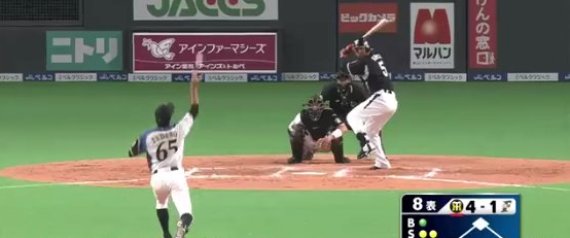
Another pitch, even more rare than the poorly-thrown knuckleball, relies on the surprise. This pitch, called an eephus pitch, is served up to the batter in such a way that it is intended to be so hittable that the batter misses.

Wikipedia notes: “The delivery from the pitcher has very low velocity and usually catches the hitter off-guard. Its invention is attributed to Rip Sewell of the Pittsburgh Pirates in the 1940s. According to manager Frankie Frisch, the pitch was named by outfielder Maurice Van Robays. When asked what it meant, Van Robays replied, “‘Eephus ain’t nothing, and that’s a nothing pitch.” Although the origin is not known for certain, Eephus may come from the Hebrew word אפס (pronounced “EFF-ess”), meaning “nothing“.[2]” 

The Eephus pitch must be used with terrible infrequency – a complete outlier. The minute it becomes expected, it becomes worthless. It’s no longer a Black Swan Event. Sometimes it’s called a ball, sometimes a strike, usually makes the batter laugh, fools even the umpire, and once, Ted Williams hit a home run in the All-Star Game on an eephus pitch. Ted Williams was the kind of batter who was always ready. Ted was one of the greats.

Greatness, in terms of “no limits to what may be accomplished” is often the result of flexibly and appropriately responding to a Black Swan event when it happens. It means the ability to recognize bear or cougar spoor and get out of the woods, or being ready for the eephus pitch, that moment in which things become so easy for you to knock it out of the park that you’re likely to completely miss your chance. I think the worst thing we could do when we see the eephus pitch coming is to freeze. Better to swing away and miss than not to try at all; as Shakespeare famously said, “Better to have loved and lost than never to love at all.”

The issue becomes one of preparation. How do you seize the day if you aren’t awake? Again, the quest for not only the truth of what is now, but the truth of what might be possible even if it has never been done, seen, or thought of, is where greatness exists, and yes, it’s improbable.

All the more reason to be on the lookout for it.

Top three reasons coaches should read fiction

Self-reflection: Because literary fiction uses techniques that dislocates our minds and call our attention to strangeness in the world (called foregrounding) that may lead us to be unsettled and look at things differently (defamiliarization) which interacts with stillness which includes self-contemplation and appreciation of art (which I believe is a component of what I’ve called hedgerows) and causes self-reflection.

Empathy: Kidd and Castano: We propose that by prompting readers to take an active writerly role to form representations of characters’ subjective states, literary fiction recruits Theory of Mind. In other words, fiction may increase empathy – both accurately identifying peoples’ emotions cognitively, but also giving us the flexibility to place ourselves in their shoes (affective empathy). There is some indication that reading fiction helps us suspend judgement of others.

Goal Setting: This one surprised me. According to Oatley, narrative fiction constitutes simulation that runs our “planning processor” which is the part of our minds we use in daily life to plan actions in order to attain goals.

The academics have much more work to do, but the more studies they do, the more links they find between reading literary fiction and several of the major pieces we need to become really good motivational listeners.

A researcher named Oatley famously said that “fiction is twice as true as fact”. I believe that this idea is related to my concept of “absolute truth” that by extending our possible world views we broaden truth, rather than narrowing it.

All these papers have one major commonality: they all acknowledge that there isn’t definitive proof of cause. When it comes to encouraging the reading of literature for the sake of improving empathy, some major issues come up. Your personality type, how do you define “literature”, whether your empathic personality predisposes you to reading, or does reading really cause empathy? There are a lot of outstanding questions.

Here’s one more statement I found interesting:

Because fiction gives us a low-threat context, it gives us an optimal aesthetic distance for constructive content simulation.

I in 2011 and 2012 as I finished my first novel, our financial situation was treacherous. (What, you’ve never heard of a first-time novelist who’s broke?) There were days it seemed it would be easier to just ditch everything, get in my car and leave my family behind. It wasn’t that my wife and I were having problems, certainly not that we had fights or marital issues, in general, but perhaps the best way to put it was that I felt pretty strongly that I wasn’t helping our situation, and no matter what I tried, I couldn’t seem to shake that for a long time. The character in that novel named Arnold, who leaves his wife and young children and goes to Alaska, was, for me as a writer, constructive content simulation. I was able to enter the world of a man who leaves his wife (entertain a fantasy, one might say) from a safe aesthetic distance, which allowed me to engage my “planning processor” and think through the ramifications of such activity, experiencing it virtually, without doing something destructive. None of the research I’ve read says anything about writing fiction. But it seems to have done the same thing for me. The immersion for the writer is, in many ways, far deeper than it is for the reader. The writer has to read the work dozens of times over, correcting it for authenticity as much as possible, which means the planning processor mode works overtime.

Sometimes it feels as though that planning processor, like a microchip, is at risk of overheating. It occurs to me now that this sort of overheating may be one cause of writer’s block.

Note: I haven’t included links, but if you want to read some of the papers, just email me.

More Thoughts about Hedgerows

When it comes to doing great listening I find that it’s difficult to do without hedgerows. This term is a little like when people talk about having margins in their life, or perhaps somewhat like taking a regular Sabbath; but there’s something more I want to explore with you.

Margins, of course, are neat and tidy. They are consistent. Whoever lays out this book will decide on a number, perhaps around five-eighths of an inch, and three-quarters in the gutter, so you don’t feel the print is mashed up against the edge of the book. It gives everything a tidy feel, so that you have some breathing room. When we talk about margins in life, we usually mean the time you take to get your coffee in the morning, watch a T.V. show at night, or attend a festival with a friend on Friday night or Saturday. “Me” time, down-time. Time spent NOT worrying about all the demands made on you by bosses, spouses, parents, children and even requests for your energy from places where you enjoy volunteering.

Sabbath is the last day of the week, the day of rest. In this article from Relevant Nancy Sleeth says: “A recent poll of 2,000 pastors in North Carolina revealed that less than 10 percent are keeping a regular Sabbath. Think about this for a moment. If 90 percent of pastors announced from the pulpit that murder (or stealing, or adultery) is OK, don’t you think it might raise a few eyebrows in the pews, let alone the press? … decide what work is for you and don’t do it on your Sabbath. For people engaged in sedentary work during the week, puttering around in the garden on the Sabbath might be restful. For people who do manual labor, holy rest might mean taking a nap.”


Okay. I don’t know if you do or don’t have margins on a daily basis or Sabbath weekly, but without them you can’t grow a hedgerow.

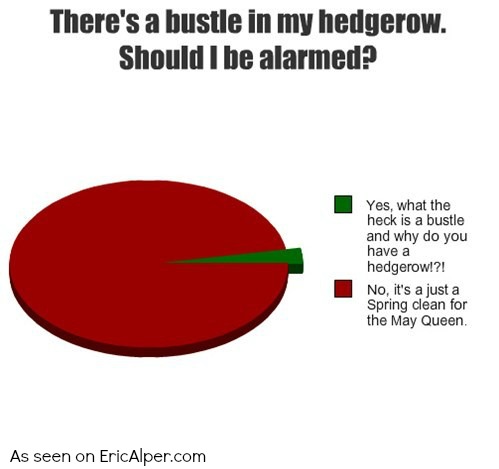
Hedgerows are something different, something more than margins and a day off. Look up hedgerows on the internet and you’ll quickly realize that the most famous pop culture reference to a hedgerow is from Led Zeppelin’s Stairway to Heaven, arguably one of the ten greatest rock anthems ever, in spite of the fact that nobody really knows what on earth this verse means:

“If there’s a bustle in your hedgerow, don’t be alarmed now,
It’s just a spring clean for the May queen.
Yes, there are two paths you can go by, but in the long run
There’s still time to change the road you’re on.
And it makes me wonder.”

stairway

It makes us all wonder. But that is the point – at least as far as my definition of hedgerow is concerned. It’s a place to wander and wonder.

An actual hedgerow is a stretch of semi-wild trees or shrubbery, (perhaps with a path!) which creates borders between fields, a place where foxes can live, blackberries can grow, and children can disappear for the day and come home happy, dirty, and still wondering. It’s right next to cultivated fields, so it’s easily accessible from the places where you normally work, the places you keep much tidier but spending any time tending and exploring the hedgerows only brings you surprises. A handful of edible mushrooms, priceless, not something you expected.

When I was a boy we had a creek, woods, places to while away the summer days, unplugged. We could spend an afternoon exploring up the creek, farther each time, we could spend hours building a hut. The best hut was built after workmen with bulldozers cleared a field for a new blueberry patch. They pushed dozens of trees and brush up against the side of the field and into the woods, and on the back side, we found a hollow. We took actual tools, bailer twine, spent hours building sides and a door, cutting and lashing, log cabin style, and camped out. We were so unplugged, so far away that we couldn’t be called for dinner, or to take out the trash – and we liked it that way.

We never felt guilty about taking the time to do this. We saw it as a normal way to spend the day.

In the hedgerow you may work, but it’s a playful work. You may write an essay and decide it doesn’t fit your book. You may run extra experiments for fun and discover something you weren’t even researching.

I believe that a motivational listener needs to not only have margins and Sabbath but also must explore a hedgerow now and then. Perhaps even often. We gain perspective just by looking at the world differently. We follow a trail just to see where it goes; and if it goes nowhere, or to the dump, where we might find some piece of junk we discovered we need in our pocket, so much the better. When we’re used to exploring hedgerows for ourselves, we’re ready to guide others in that same quest.

When we listen, we listen for the interesting bits. Not the parts where people are regularly cultivating a field. When I coach, the areas where my client has neatly plowed and planted, the parts of their lives that are in order, are not the places where we can discover anything new. We won’t find the interesting rock walls to climb, the juicy blackberries to pick, and we won’t spot a skunk in their neatly plowed fields. But if there’s a bustle in the hedgerow, I follow it.

How do I schedule time to be in the hedgerow?

The main tactic to make space for this is to loosen up your schedule. I just re-took the MBTI personality test and discovered that I’m borderline between Judger  or “J” (the type of person who likes to have a strict schedule) and the Perceiver, i.e. “P” (the one who likes to keep their options open). I believe that Personality Type isn’t static. I used to be a pretty intense J, but it’s the P who likes to make up stories. It’s the P who has empty space in their schedule, and likes to keep it that way. In other words, partly because I learned to coach and to write fiction between 2009 and 2014 while being under-self-employed meant that I naturally had a lot more room in my schedule than I used to, and I had to adapt to that lifestyle, which meant becoming comfortable again in the hedgerows.

I can’t tell you excactly how to loosen up your schedule. That’s a problem for you on an individual level. (If you’re having trouble doing it on your own, you’re a candidate for a wax job). After all, it was somewhat forced on me by a variety of circumstances. One thing I can say for sure is that without it, I wouldn’t be the motivational listener and storyteller that I am today, certainly not with the same quality and excellence.

I think this is something that business coaches often don’t really find their way into. They move from high-powered executive positions to hard-charging coaches who are constantly selling and networking, rarely with time themselves in the hedgerows. This makes it difficult for them to invite people into the hedgerow. For those of us in a busy Western world, or in a busy business environment generally (and they tell me now that things are even busier in Seoul and Singapore than they are in the USA). But business people don’t need your help with more cultivation. They need help exploring hedgerows.

Trip to Congo: Decision is YES

Around 200 Congolese delegates from Kinshasa were preparing to attend Mennonite World Conference in Harrisburg, PA in July. Each of them needed to come up with $160 for a visa application (not a small amount for Kinois) and needed to have an interview at the U.S. Embassy in Kinshasa. An agent was hired to guide them through the application and interview process, (what to say, what not to say in this interview) and he was entrusted with the money. Eventually, the agent told the entire group that their interview was set for a certain day; when the group arrived at the embassy, however, they were told the embassy knew nothing about them. The agent had absconded with the money. There would not be another opening for interviews at the U.S. Embassy until well after the conference. Our brothers and sisters from Congo got screwed by the agent, who took off with the money to Brazzaville, on the other side of the Congo River. All but a small handful of the original delegates were unable to attend.

This is a sad story. On all my trips to Africa, I’ve always heard the same thing: please don’t forget us! I can’t forget these brothers and sisters, and I’ve decided that whatever the score may be on my fundraising at the moment, it’s time to buy the tickets for September. I didn’t have a plan B for that month anyway. I’ve applied for my visa. I’ve had my yellow fever booster shot. It’s time to commit.

With just $1400 outstanding need for my budget, I’ve decided to go ahead and purchase tickets for the trip to Congo. I do still need to raise this money for a significant part of my budget needs, but enough has come in that I’m able to purchase tickets. Could something still stop me? Yes, an Ebola outbreak or a violent coup within the next few weeks would change my plans.

Thanks so much to all who have contributed! If you’d still like to donate, go here.

The Garden Gnome

Want to improve your empathy? Go read a novel.

Once upon a time, there was a simple garden gnome named Bill. Bill was the kindly looking type of gnome, with half-glasses he used for reading. It wasn’t so much that he was looking down his nose at you, as he was looking over his cheeks. You know the type. Of course he wore a red cap and a green vest, except on Tuesdays when he wore his plaid one. Bill the Gnome knew all the woodland creatures by name. Hubert the Turtle, Wally the Rabbit… Bill even had tea with Guinevere the Red Fox on occasion. One sunny morning, as he walked along, he came across an old copy of The Wind in the Willows, upside down in a patch of ferns. “I know,” said Bill, “I’ll take this over to Nancy the Field-mouse. She’ll love this story.” So off he waddled, to find Mrs. Nancy, without even stopping to wonder who might have lost this beautiful book. And so his adventure began.

I have for some time this year had a theory that reading fiction would make one a better listener. But now I’ve found some exciting research that proves it, so don’t take it from me. When it comes to social sciences, I’m no academic. I’m just a simple practitioner of empathy and fiction. But some folks discovered that fiction does indeed increase empathy – and even more importantly, reading non-fiction is a negative indicator!

Of course the volume was something Old Gravel-Pit the Snow Owl had dropped one night. He’d been reading by the light of the moon when he saw something far below his treetop perch that caught his attention. It glistened as though it were a very large rodent with one eye open and the other eye closed. Was some cheeky woodchuck winking at him? How dare he? And so, forgetting his book, Old Gravel-Pit (we have long forgotten how he came by this name, I suppose that somewhere along the line they added the “Old” part, though perhaps he was born with it, being an Owl and all) and … Where was I? Oh – and forgetting his book he swooped down to take what was rightfully his; that is, anything he sees, as far as he is concerned, be it a woodchuck or a pocket-watch.

Here is the Abstract from an October, 2006 paper by Raymond A. Mar, et al, in the Journal of Research in Personality:

While frequent readers are often stereotyped as socially awkward, this may only be true of non-fiction readers and not readers of fiction. Comprehending characters in a narrative fiction appears to parallel the comprehension of peers in the actual world, while the comprehension of expository non-fiction shares no such parallels. Frequent fiction readers may thus bolster or maintain their social abilities unlike frequent readers of non-fiction. Lifetime exposure to fiction and non-fiction texts was examined along with performance on empathy/social-acumen measures. In general, fiction print-exposure positively predicted measures of social ability, while non-fiction print-exposure was a negative predictor. The tendency to become absorbed in a story also predicted empathy scores. Participant age, experience with English, and intelligence (g) were statistically controlled.

Of course it turned out to be a pocket-watch some careless gnome had dropped; it would go nicely with a plaid vest. Gravel-Pit the Snow Owl was disgusted to find that it was both inedible and also useless at telling any sort of story. He went in search of his book again the next evening as the sun went down, and it was just as Bill the Gnome turned out of the woods and into the field, that Gravel-Pit finally saw his book waddling along. Without thinking how the book might be moving on its own, he snagged it in one talon. Poor, surprised Bill forgot to let go of The Wind in the Willows as it lifted off, and soon he realized that he didn’t want to let go of it anymore, now, being so high off the ground, and up he went, higher and higher, sailing towards the Great Wheat Field where one could get lost, and beyond!

Do you feel for Bill? What would you rather do, read more about Bill, or go find this Study online and read it all? Did you really read the abstract, or just skim it? Did you just jump ahead, absorbed in the story, to read more about the silly gnome? (If so it’s a good sign for you as an empathetic person and for me as a writer!) Now I’m not saying that this little story I slapped out in a few minutes about a gnome and an owl contains any sort of literary brilliance, but the truth is, we hunger for story (which gives us something to think about), more than we do for non-fiction (which is where we get told what to think). Chances are you aren’t reading this article while on a date. No, you go to a movie!

Today I was working with a new coach, who was trying to get a visual picture for himself of what he wants to become in this next phase of life as a coach. I asked him to think of characters in movies or books that he admired, and he came up with Gandalf the wizard, (for how he’d like to be) and The Secret Life of Walter Mitty (for the types of clients he wants). The key is becoming deeply involved in reading a story, not in movies.  Movies don’t count for developing empathy (at least not as far as the research shows.) Still, asking people about movie characters is an excellent way to help them visualize. Fewer people are reading fiction all the time. And we wonder why we’re lacking soft skills? You could go read the report, or you could take my word for it and go grab a novel.

Adam G. Fleming is a leadership coach specializing in creativity and the author of one novel, White Buffalo Gold, 2012, available on Amazon.

Memory’s Patina

In courtroom psychology, where facts are king, memory has been shown to be one of the more unreliable tools for discovery. Each time we recall an event, our brains add to or subtract from the experience, creating a patina, adding layers of varnish or grime so that while the antique table of our memories looks less and less like it did the day that memory was made, we only recognize it years later as the shiny antique we now see.

If an ancient memory is like an antique table, what is the value of stripping it back to its bare facts? For those who love the PBS show Antique Road Show you know that stripping the patina and refinishing a piece of old furniture actually lessens the value of it, but in some cases a painting or piece of furniture can also be restored by an expert, giving it even greater value. In the same way, your memory, coated over with layers, may become less valuable as a tool to illuminate beauty and principle if stripped by confrontation with the basic facts; as if it were a pearl stripped back to the initial grain which irritated the oyster. On the other hand, the idea of “cleaning or restoring” corresponds to the idea that we might take that memory and distill from it the underlying principle, making it elegant again.

We do not want to strip the memory to bare facts, but we do want to highlight the beauty of what we learned from it, what stays with us as evidence of the refining of time which makes it more valuable. It isn’t the wood of the table (though it may be from an extinct tree such as the American chestnut – that is the like the last remaining person whose personal memory includes World War One). The beauty is the patina itself, something nobody could create, it’s only made by time.

So. Memories attached to emotions, are one of the most reliable tools for getting at the principles of what impact events have had on the speaker’s life. For example, my memories of Congo are not perhaps factual, (see Congo blogs in archives) but the principles I’ve drawn highlight what was valuable in the experience.

We might even say that the writers of the four Gospels, who waited some thirty years, may not have given us the facts, in the strictest sense, that they might have if they were involved in some sort of daily journalism during the days of Christ. On the other hand, their somewhat delayed picture may be even more valuable for the patina they added; the things they remembered because of how the principles continued to ring true over time come closer to an illumination of the indelible reality Jesus left them with than what a newspaper man might have given us looking at events in real time.

The Listener understands that truth may contain facts, but no true story contains all facts, and therefore a motivational listener is unconcerned with knowing all facts. Long before Christ walked the earth Lao Tzu speaks of the “Myriad things” or “Ten-thousand things” while Solomon ridiculed the quest for all facts “everything under the sun is vanity.” The aim of their poetic philosophy is to uncover principle, not to catalog fact. They realized long before computers existed that nobody would ever be able to collect all facts in one place and that facts were, in fact, relatively superfluous to the discovery and illumination of truth.

The Listener hears stories constructed from Memory knowing that such stories are, as time goes on, scientifically unreliable in terms of factual reconstruction of events, but that the same Memory is remarkably reliable in its able to recall emotions experienced or established during an event. In my recollections of Congo/Zaire 27 years ago, my memory now has such a patina that you should not trust my memory to give you a perfect rendering of the facts. You should be able to trust that the patina on my memory will give you a very accurate rendition of how the events shaped my life. And that is the reality I now live.

Canonized books of story or poetry which have been used as factual sledgehammers cause us discomfort, but their original impact in society was due to their usefulness in the way their story elucidated truth regardless of factuality. The first question to ask when studying canonic texts is not “is this or that a fact?” but rather, “how does this story impact me emotionally? What true principles are here?” If the story should turn out to be factual as well, all the better.

The Listener reads fiction with abandon, uncovering truth wherever it may be found, and reads non-fiction with caution, recognizing that each fact stacked upon another fact could build a tower of Babel; that a large collection of facts twisted for the writer’s profit is less valuable than a single principle uncovering some absolute truth. And so, for example, the books of the Bible, if you take them to be fiction, read them with abandon, and if you read them as non-fiction, read them with caution. When you listen to a companion, encourage their wildest fantasies, let them ride unicorns to the ends of rainbows where they find pots of gold, and take their statements of fact (particularly when remembering facts of long ago) with a grain of salt.

Hedgerows

Hedgerows

Wendell Berry loves to talk about how we need to maintain healthy hedgerows where the wild meets the cultivated. Those hedgerows are places where foxes live, where biodiversity is maintained in favor of monoculture.

My wife does most of the gardening. Along the south side of our house, nearly invisible from the street, we have a variety of fruits and vegetables in a narrow strip. (We have a city plot so I’m talking about a strip south of the house between our foundation and the property line only six feet wide.) There are squash, tomatoes, rhubarb and raspberries this year. I know my veggies, but I’m always making up names for the flowers because I never know which name goes with which blossom.

“Look at these chrysanthemums, they’re nice,” I say.

“Those are peonies,” she says.

“I like the daisies,” I say, and she tells me they are lilies. I shrug. Doesn’t matter. Can’t eat them. As a writer I’m more Garrison Keillor in this way than Barbara Kingsolver. Keillor admits he doesn’t know from trees. Kingsolver manages to write novels that are more about plants than they are about the people who cultivate and destroy them.

But I know milkweed; I’ve known it from childhood, and I’ve become more excited about it since reading Kingsolver’s Flight Behavior. I’ve allowed it to come up in a corner of my back yard. That’s because milkweed is the only plant on which the monarch butterfly will lay her eggs. It’s called a weed, but the blossoms do have a sweet smell. Today, while I was looking over the raspberries semi-productively, and suddenly, halfway through our second summer of allowing milkweed to stand in my mini-hedgerow, I got the reward: a monarch butterfly showed up and flitted about.

Making space for hedgerows are important to biodiversity, and when we strive to become better listeners we also need to make space for a hedgerow. The analogy works two ways. First is the milkweed. That’s the space in your own life for time to create; I mean down time. It’s really hard to help someone slow down if you haven’t practiced it yourself. Taking time today to snap photos of “our” butterfly was that creative down time when it doesn’t matter if anything really gets accomplished.

The second hedgerow is like the butterfly itself showing up, and it happens during a listening session. This is a conversational border area, a place (usually at the beginning and end) of a conversation where we aren’t just cultivating our usual corn and beans, that is, trying to be productive with our time. Instead we’re just wandering through some down time together. The biodiversity in the hedgerow of a conversation can show us that wild side in our humanness. There’s value in that wild side, beauty, moments of migratory musings and shy potential which can lead to the best stuff. It’s why I prefer an hour session to a half hour. In 30 minutes, I can coach and issue beginning to end, but I don’t have the time for that extra moment to notice the best little pieces of life. Hedgerows have to be cultivated, too, but it’s a cultivation of non-plowing, non-sowing. Make space for these kinds of margins in your week (allow milkweeds), and then in your conversation (be alert for butterflies).

Playing the Blues on Vortex Street

No man is an island,
Entire of itself,
Every man is a piece of the continent,
A part of the main.
If a clod be washed away by the sea,
Europe is the less.
As well as if a promontory were.
As well as if a manor of thy friend’s
Or of thine own were:
Any man’s death diminishes me,
Because I am involved in mankind,
And therefore never send to know for whom the bell tolls;
It tolls for thee.

John Donne

On the heels of thinking about rivers that move so slowly it’s hard to tell they’re going anywhere, or those lazy spots where everything’s so wide it loses focus, I also see a place where things speed up … in reverse.

In an eddy, liquid spins backwards as it flows past an obstacle.

The old school language for this is backsliding, but the liquid in an eddy will eventually flow downhill with gravity, so this language feels more hopeful. That’s easy when your life is like a river, but what about when mapping your life feels more like oceanography?

Sometimes life feels more like an ocean than a river. Tides slosh us back and forth, and the meteorological systems that accompany and impact our routines are far more complex than the ecosystem of a simple river.  Then there’s the foundational shifting of tectonic plates; in short, life throws so many transitions, changes and complications we easily end up adrift in an ocean when all we hoped for was a ride downstream.

Ocean vortices, also called mesoscale eddies, can sometimes last for months, and cover areas as big as 500 km in diameter.

Even more intriguing is the Karman vortex street, a phenomenon when eddies in a repeating pattern happen on the backside of a blunt object, such as Guadalupe Island, 150 miles west of Baja California. Guadalupe causes a vortex street almost every day from June to August. The alternating eddies formed in a vortex street in the lee of an island take turns in a repeating pattern.

Obstacles that cause regular patterns in our lives can be surreal. Sometimes the obstacles in our lives are permanent and create vortex streets which become part of the landscape. Some days we can ignore them completely because we live with them; other days we have no choice but to acknowledge their existence.

I was talking to Jason (name and story used with permission) last night. Jason routinely places in the top ten in local triathlons, recently he placed 6th in a field of 200+. He once qualified to participate in the Best of US Amateur triathlon and flew from Alaska to Vermont to compete in what turned out to be a pretty exclusive race, with only a handful of male and female qualifiers invited from each state. (He wasn’t one of the top finishers that time, though.) His level fitness comes partly from an incredible work ethic and partly from a diet extremely low in fats because his body can’t handle them. What people don’t see when they watch Jason compete is his chronic familial pancreatitis, with a suspected slow-growing tumor; and he also battles renal cell carcinoma. Jason has undergone multiple surgeries and has been in danger of losing his life. He schedules medical procedures so regularly, he says, “it’s like the way you would schedule with your dentist or eye doctor.” (He tells me that tomorrow, July 22, he has an endoscopy scheduled.) Who knows if he would still be surviving if he didn’t push his body to the limit in training and competition whenever he’s healthy? It gives him the ability to fight when his illness takes over for a period of time.

This condition is Jason’s vortex street. “It’s surreal,” he says, “I’ll place sixth out of more than two hundred in a triathlon, then I’ll come home and there will be a medical bill I have to pay. I don’t feel sick, I feel great.”

The last time he was in the hospital, I went and sat with him for a couple hours, and I cried. I wonder when I will lose some of my closest friends who deal with diabetes, rheumatoid arthritis, and I treasure the small interactions of our lives; the sharing of a picture of their children on Facebook, a phone call to say “congratulations” for small victories, or “I’m glad you’re feeling better.” If, and ultimately when, we lose these “clods and promontories” as John Donne called them, we will all be the worse. When the bell tolls for them it also tolls for us. We all sing the vortex street blues.

Singing the blues is a simultaneous sharing of woes, while feeling good somehow that a better day will come. My friend Jonathan wrote a song that begins like this:

Better days gonna come again/ put your raincoat on, you’ve been stuck in here too long.

We have to get out. Jason does this better than anyone I know. His body creates one of the most intense vortex streets, a constant drag to the leeward, but his discipline to get his raincoat on and get out is an inspiration.

We often do feel like islands, (and we feel that our own physical selves are that obstacle which causes a vortex street) and yet John Donne insisted, we are not alone, that we must grieve every clod lost to the waves. When our friends are singing the blues on vortex street, our job is not to ignore, but to acknowledge, and to celebrate small victories as we navigate through the eddies. Perhaps worse than the backwards motion of backsliding, like a temporary eddy in a river, is the three-hundred mile wide mesoscale eddy in the ocean, or the vortex street that follows us around like a pair of ribbons streaming behind us, creating drag. The mesoscale eddy or the Karman vortex street are disruptive, regular, and part of the ocean that picks away at our continent.

What’s am I listening looking for? What’s the value of recognizing a vortex street in a friend’s life?  Look for ways to find inspiration from someone’s efforts and then highlight it. Invite people to get their raincoat on and get out.  See people in poverty rehearse and perform a symphony in spite of it. When you see people in pain who compete in spite of it, share each others’ stories (with permission!) and be aware that some of us live with permanent obstacles. The vortex street comes from permanent obstacles, difficult surroundings, but it leaves a trail of beauty if we’ll only look for it.