
Writing about Writing is Writing

It’s popular to say that writing about writing is not writing.

I’ve decided I disagree.

Because writing is part of making art, and because making art aids people to become more self-reflective, writing about writing is just another level of being self-reflective.

Now I’m not saying we shouldn’t have disciplined times to work on our fiction. But writing about the work we’re doing on fiction can be a huge part of getting past writer’s block.

I’m not completely prepared to say what causes writer’s block, or even define it. I just think that writing about writing, the meta-work of a writer, could be extremely good for you and could even be considered writing.

This is a philosophical concept I think ought to be called meta-writing.

I’m coming around to this once again as I read the postscript to The Name of A Rose, by Umberto Eco. His entire novel is a book about books. He spends the entire novel writing about the written word. Of course, there’s a murder mystery and a fairly decent performance by Sean “Shawn” Connery and Christian “Laettner” Slater if you can look past the sort of grainy kind of cameras they used in the Middle Ages. But really Eco spends the whole book writing about books, and then the postscript writing about writing. You’ll get this if you read the Postscript, which is actually published as it’s own volume in some cases.

If it’s good enough for Umberto Eco, it’s good enough for me. Happy writer’s Thursday.

NaNoWriMo writers: When does your real day begin?

Happy First of November.

For those of you who want to start writing a novel today, we’ve got a great writer’s group which meets on November 19 via teleconference. But the first thing you need to do is figure out when you’re going to do this important thing you’ve decided to do. Maybe you’re writing a novel this month, and maybe you aren’t, but this ought to be helpful no matter what your top priority is.

Ask yourself: what’s your top priority right now? Working on a novel? Spending time with kids? Getting more sleep? Landing a new client?

Day begins at dawn. Or does it really?

Based on the premise that we ought to put the top priorities on our schedule for the first thing to do in the day may mean that we need to think outside the box about when our day begins. If my top priority is getting more sleep, then my day might begin at 9 PM. If my top priority is spending time with the kids, it’s 4 PM when they get home from school (and my week begins at 4 PM on Friday). If it’s finishing that novel, it begins at 7 AM with a two hour writing session before I do any other work, and my month begins with the weekend where I schedule a writer’s retreat.

Think outside about what time your day begins. Set that time for your most important activity of all, then, and only then, after you’ve done that, you can do whatever you can with the rest of your day. Everything else revolves around what’s most important to you. You may notice that this is when you have a surge of energy — when beginning that thing which is most important. Or, you may decide to begin your day at 8 AM with the thing you least like to do but is important for your success.

In the Jewish tradition Sabbath begins at sundown on Friday; in fact, every day begins at nightfall, not at dawn. There’s no reason you can’t set the beginning of your day for some other time than when you wake up (unless you’re practicing this aspect of Judaism, of course, then you have to follow your convictions). The point is that you really can begin to think of a different time than dawn as the beginning of your day.

Change your thinking about what time of day your day really begins, and you’ll have a new tool for time management. Do the most important stuff first, and everything else can fall into place. Then, set a goal and tell somebody about it!

Writer’s Group: I can do it on my own. Really?

Writing is a solitary existence. The best advice-givers, like Steven King in his book “On Writing” suggest that for a certain amount of time in the course of your manuscript you need to work alone, without allowing other people to see, read or influence what you’re doing.

That’s true, which is part of the reason our writer’s group doesn’t do critiquing. We don’t want to interrupt the flow.

On the other hand, you have to be highly motivated to keep plowing ahead. It’s so easy to just surf the net or go for a long walk rather than write. That’s why we get together for accountability. You set your goal for the month, and you’ve got to deliver.

My goal this past month was 15,000 words. My total was closer to 20,000. If I didn’t have a group I was committing to for that kind of production, it wouldn’t happen.

How many words are you writing this month? What’s your goal? Who’s holding you to it?

Writer’s Group: Setting a really great goal

What sort of goal pushes you but is attainable? That’s what Justin and I have decided to push ourselves and our group toward, so that each one is making headway in writing their book.

I’m setting this blog up a few days in advance. I committed to 15,000 words this month and I have just over a thousand left, two days to go. I’ll attain my goal. I’ll push for that last amount partly because I’m leading and it would be poor leadership if I don’t lead by example, and partly because I’m serious about meeting my goals anyway. And partly because I’m committing to it once again, with 51 hours to go.

We fully expect that the writers in our group will publish their books sooner, more frequently, and with more quality than if they were not in the group.

Yesterday I sent my editor my final comments on the first round of corrections for the full draft. In less than two weeks, my goal is to finalize all the copy and send it to press. I’m ambitiously shooting for publication, for books in my hands, by December 1.

Set your goals just low enough that you can attain them every month, and just high enough that it will take effort. Both of these are important. You MUST attain your goal each month, otherwise you become discouraged. You must also set it high enough that you have to work for it. Otherwise it’s not a goal. Think of it this way: if you say “my goal is to eat three square meals a day” but you already do that anyway, as sort of a natural course of events, it’s not really a “Goal,” is it? But if you change the goal to something like this: “I will eat small portions including hard boiled eggs and carrot sticks six times a day, making sure to chew my food completely, and cut out sweets for the next eight weeks” there is a pretty good chance you can do it, and a pretty good chance it will take some conscious effort. Just like health and fitness goals, writing goals must be attainable to keep up your enthusiasm and courage, and hard enough to let you know there’s effort involved. Best of luck in November, when many people write short novels … but you could be writing novels every month with just a little more regular discipline and accountability!

Writer’s Group: Even when editing

Justin and I were talking about what to do with those in the group who are moving into heavy editing phase. If you’re editing, I said, you still need to keep momentum going, perhaps even for your next project. So we’re encouraging people even when in the midst of editing heavily that they still need to hit a minimum word count. That may be a blog, or working on the next story, or a poem. If we get too mired in editing, it becomes easy to quit writing entirely when the book is done. I’m editing a lot this month, but still shooting for at least 15,000 words. How are you doing?

Next group will meet Oct 22 at 8 PM eastern. If you want in, contact me. Drop progress reports in the comments! Keep up the good work!

UPDATE: Since I’m leading the group it’s important that I practice what I’m talking about here. I have been in heavy editing phase the last three days, but I’m still on track to hit my target of 15,000 words this month — and that’s not including what I did to my manuscript in second draft over the last few days. Vital stats for me today:

Goal is 15,000 words. 10,821 so far, 4179 to go with 13 days remaining. 321 words a day. Easy as pie to hit or beat that target.

Writer’s Group: You get an extra week — what will you make of it?

Hey everyone. So this month we have five weeks between meetings.

We all bumped up our goals for the month, but seriously, I bet we can all beat them by a significant margin. There are still three weeks left, but don’t be like that 1600 meter runner who lags badly on lap 3 out of 4. The “third lap” on the track for the runner who is attacking the mile (metric version) is where the gap is made up. It’s easy to run a good time the first lap when fresh, and easy on the last lap when almost done. It’s what you do with the middle laps that makes all the difference. Roger Bannister got this, and the mental edge gave him the first sub-4 minute mile. Granted, he was gassed:

bannister

SO we get three middle laps this month instead of two. Stick to your pacing!

Our next group meets Oct 22 at 8 PM eastern. Drop comments on how you’re progressing!

Writer’s Group: We are writing books

Just a quick encouragement for the people in our writer’s group (see writer’s group page in sidebar).

Yes. We are writing books. Last week we got an update from Justin, whose goal was 8000 words this month. He wrote 8100 in spite of duress. Tim also chimed in on his goal of 4000. He wrote about 5000. And on my goal of 10,000 I had written 14,400. 6100 of those were on my novel, which really feels like a side project while I finish The Art of Motivational Listening, but when that book is done, it’s going to feel really good to have the next novel moving along even if it’s at a fairly slow pace.

Because we are committing to write words every month, we are, therefore, indeed writing books.

If you’re in the writer’s group (next meeting is Oct 22 at 8 PM Eastern) please hit us with a comment on how the week went!

Using your Non-Dominant Hand

Last night my writer’s group was talking about whether or not we, as novelists, were more comfortable writing by flying by the seat of our pants, unsure even where the plot is headed, or whether we preferred instead to structure our work with a tight outline, then fill in the gaps. The one we are comfortable with, Justin Fike said, is like our dominant hand. (A third way emerged, which is to write fiction by taking copious research notes.)

Justin Fike then urged us to set goals that would help us increase our ambidextrousness.

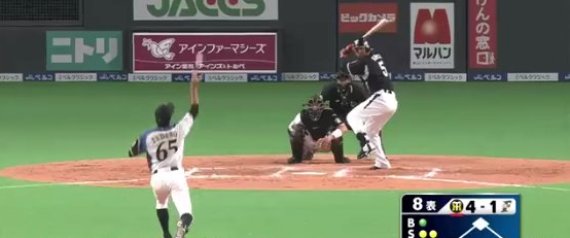
The image that came to mind was that of a baseball player learning to use a glove. My left is my dominant, so my right hand is my glove hand. I am one of those people who is extremely dominant on one side. My right hand is so bad that I have trouble typing the O and P keys on a keyboard (making matters worse, I damaged my right pinkie when I was 14 years old). But when I was only 4 or 5, I learned to put a baseball glove on the right hand and catch with it. I can’t throw for anything with that hand, but I can snap that glove shut on a ball. And for playing baseball, that’s the main thing I had to learn with the non-dominant hand.

Writers have to learn at least some competency with their non-dominant hand. Your dominant one is fun, easy and relaxing. For me, I can just get an idea and take off writing. Coming back to the structure part is work, takes concentration, and isn’t fun. At first, it’s awkward, just the way a kid feels when you first put that glove on their non-dominant hand and tell them to catch with it.

I suspect even if you’re not a writer, whatever job you have there are aspects that come more easily than others. Some people say to focus on your strengths, which probably has some value in certain seasons of life. But no baseball coach ever told a kid not to worry about catching and just focus on throwing. That would be stupid. You can’t really throw if you haven’t caught the ball.