Congo: Day One, May you please have a try.

Here I am at MPH Guesthouse. When our family first arrived in 1987 we stayed here. The drive in from the airport is long and crowded, and the city is full of hustle even at 9 PM. On my bed is a towel, a bar of soap in a box. The box says Beauty Soap Juliet TM Floral Bouquet, Lingering Freshness, New and Improved, and has a picture of a very attractive Indonesian woman on it. The soap is made in Indonesia, marketed from Malaysia, and imported in Algeria by SARI Far East Marketing. Somehow it’s here in Congo. It’s pretty good soap, it really does smell nice, leaves you feeling clean, rinses off well. I also get a complimentary roll of crepe paper, apparently for when I need to go take a crepe. Seriously the paper looks like a dull lavender version of that streamer stuff you decorate for your birthday with. This reminds me of the t.p. we had long ago which was made in China and said “BAMBOO Toilet Paper. may you please have a try.”

My bags didn’t arrive with me, I barely had time to catch my flight in Brussels. I had to run to my gate, and when I asked the gate attendant if I had time to use the restroom before boarding she said “TWO minutes” so I am just glad I made my flight. But since we arrived in Brussels late from Chicago, my bags didn’t get on the plane. I’m very glad I observed Travel Tip #1, which is to always carry an extra pair of underwear and socks in your carry-on luggage. I probably won’t have my suitcase until tomorrow afternoon, so it looks like I’ll be in my favorite pair of jeans for 4 days straight, and borrow shirts from Bill Frisbie and Charles Buller. Fortunately they are both bigger than I am.

I don’t have photos for you yet because the cable that connects my camera to my laptop is in my suitcase.

On the drive in from the airport, the night was breezy and cool. It’s dry season, so even as it gets warm this afternoon it will be a dry warm and I doubt very much that we’ll ever get seriously sweaty. The air is full of smog, fumes from cars and motos that don’t have proper exhaust systems, plus charcoal fires. I exit the airplane and the first thing i notice is the smell: heat wafting off the asphalt. I catch a whiff of barbecuing meat. I smell diesel rolling off trucks. People carry cartons of eggs on their heads, sometimes a couple hundred eggs. You could buy one right off their head, a hard-boiled egg. People are carrying anything you might want to buy on their heads. They drift through traffic, hanging on the sides of minibuses, harassing drivers who’ve done everyone a disservice by trying to cut around a line of traffic — if you can call it a line. One intersection has a “robot”, a sculpture designed by an art student which has alternating red and green lights. Apparently because this thing has arms it gets more recognition as a legitimate traffic director, and when the light goes red people actually stop. Aside from this one intersection, it’s go when you can and stop when you must. Charles orders pizza while we are still driving in.

We arrived and our driver was tired.  They started out for the airport at 3:30 PM, it took them over two hours to get there, through rush hour, and an hour or so to get back, so he’s been driving quite a while. I would not want to drive here, it’s stressful. If you hit a pedestrian you’d be likely to suffer mob justice: a beating or worse. We passed a hospital I am almost positive I saw on the documentary “Kinshasa Symphony” a few months ago.

Pizza arrives. It is wood-fired, and the crust is delicious. There is “tropical” which is onions, mushrooms, chicken and pineapple, and “o poeto” with green pepper, burger and sausage. I haven’t eaten pizza for so long … we put piment on it too. That’s a bright red pepper paste, which I ate for the first time at this very establishment 28 years ago. It’s hot. REAL hot. But does have a certain flavor enhancing property. I ate piment on my first two slices, and then I noticed my eyes were leaking for some odd reason, and didn’t put any on my third piece.

Showing up at a guesthouse where our family stayed for a week and a half in 1987 is bizarre to say the least. My brother would remember playing ping-pong with me here. The place is dilapidated to be sure, the tennis court, which was beginning to be overgrown in ’87, is now completely unusable. But the interior is still comfortable, with clean sheets and comfortable cots, a clean bathroom with hot water, fans that keep the air moving, and though I didn’t have a mosquito net, I didn’t need one. Dry season means no mosquitoes this week. As far as jet-lag goes, I fell asleep at 11:30 local time and woke up naturally at 6:45. I’ll probably be drowsy this afternoon and might need a nap, but because I didn’t sleep too well on the airplanes I’ll probably adjust faster because I didn’t wake up in the middle of the night and slept almost eight hours straight.

In 27 years many things have not changed. Old buildings are older, but what is noticeable is the ubiquity of cell phones. Huge billboards advertise free Facebook all the time with a certain cell-phone plan.

A tailor showed up to deliver a shirt for Charles this morning. On spec he brought a second one, and Charles bought it. I liked the fabric so I ordered one as well, and in three or four days, he said, he’ll show up before lunch time to deliver it.

Bill Frisbie felt affirmed when I noticed at breakfast that he said “tell me more.” I told him that was an old standard coaching hymn. He said, “that doesn’t make it any less special,” and I said, “no, of course not, it’s like singing Amazing Grace.” Bill is off for Kikwit this morning, he was supposed to go yesterday but that fell through. We were glad to see each other. He’ll be back in next Saturday and we’ll go to the airport together as we come home (though on different flights, we depart within an hour of each other).

We’re just getting started, but for those who are praying for me here are two things to pray for: 1) Pray that my stomach tolerates the unusual amounts of gluten I’m consuming. 2) Pray that my bags will arrive intact today and that we can pick them up without a hitch tomorrow.


Using your Non-Dominant Hand

Last night my writer’s group was talking about whether or not we, as novelists, were more comfortable writing by flying by the seat of our pants, unsure even where the plot is headed, or whether we preferred instead to structure our work with a tight outline, then fill in the gaps. The one we are comfortable with, Justin Fike said, is like our dominant hand. (A third way emerged, which is to write fiction by taking copious research notes.)

Justin Fike then urged us to set goals that would help us increase our ambidextrousness.

The image that came to mind was that of a baseball player learning to use a glove. My left is my dominant, so my right hand is my glove hand. I am one of those people who is extremely dominant on one side. My right hand is so bad that I have trouble typing the O and P keys on a keyboard (making matters worse, I damaged my right pinkie when I was 14 years old). But when I was only 4 or 5, I learned to put a baseball glove on the right hand and catch with it. I can’t throw for anything with that hand, but I can snap that glove shut on a ball. And for playing baseball, that’s the main thing I had to learn with the non-dominant hand.

Writers have to learn at least some competency with their non-dominant hand. Your dominant one is fun, easy and relaxing. For me, I can just get an idea and take off writing. Coming back to the structure part is work, takes concentration, and isn’t fun. At first, it’s awkward, just the way a kid feels when you first put that glove on their non-dominant hand and tell them to catch with it.

I suspect even if you’re not a writer, whatever job you have there are aspects that come more easily than others. Some people say to focus on your strengths, which probably has some value in certain seasons of life. But no baseball coach ever told a kid not to worry about catching and just focus on throwing. That would be stupid. You can’t really throw if you haven’t caught the ball.

All your trash goes to the ocean

As I’ve walked more through town the last month or so to get my exercise I pick up aluminum cans for recycling. My eyes scan the ground. I’ve learned to look at those grates in the corner of the road that shunt all the rainfall off into the river. They usually have organic material on them– twigs, leaves, and grass. I have also found a LOT of aluminum cans on them. The can gets smashed by a car, then swept along in a rain, and sits on the grate. It has gone as far downhill as it can for now. The trash in your life is the same way. It floats down to the river and the ocean, where it impacts everyone else. What can you do?

Don’t throw your trash on the road. Clean up after yourself. Keep our oceans clean. In other words, apologize.

General Awareness

General Awareness was hiking through the woods when Major Distraction came zipping along in a jeep and caught up with him.

“What are you looking for, General?”

“Everything,” replied the General, “and nothing in particular, just keeping my eyes open. At least, nothing I can really define right now. I’m sort of, wow, you got that jeep tricked out pretty sweet.”

“Thanks for noticing! Yes, and it’s faster than walking, you can get where you’re going easily with it and find just about anything around here; want a ride? I can take you anywhere you want to go, and we can find whatever you’re looking for! Look, up ahead, there’s a great view of the valley,” Said the major, bouncing in his seat.

“It’s very nice, but, I think I’m looking for someone who’s afoot; I think I’ll have to walk just to remember what or who it is, and besides I think you have to sneak up on it,” said the General.

The Major roared away laughing. When he was gone, the General sat for a few moments gathering his thoughts. Then he gazed up into the trees. He looked at them one at a time, but soon, he saw the forest. “Ah, there you are,” he said, “I knew you were right around here somewhere.”

“Yes, I’ve been here all along, hiding in plain sight. But you can always find me just by being yourself,” said a voice.

“You’re always so good with your camouflage, Colonel O’Truth!” Said the General with a smile.

“Would it be any fun to find me if I wasn’t?” Replied the Colonel.

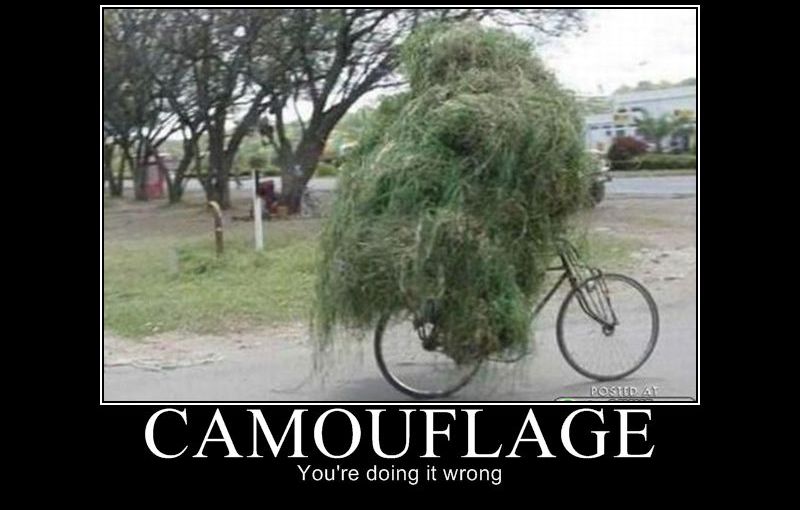
camouflage

Now that, right there, that’s Colonel O’Truth if I ever saw it.

Dr. Seuss and J.R.R. Tolkien

Seuss and Tolkien got together to write a pledge to becoming better listeners.

This is what they came up with:

I would listen in a box, and I would listen to a fox. I could listen to a hobbit, I will listen ’til you stop it. I would listen in a house, and I would listen to a mouse. I will listen on the train, and I will listen in the rain. I love to listen, Sam Gamgee, I‘m listening right where I be.*

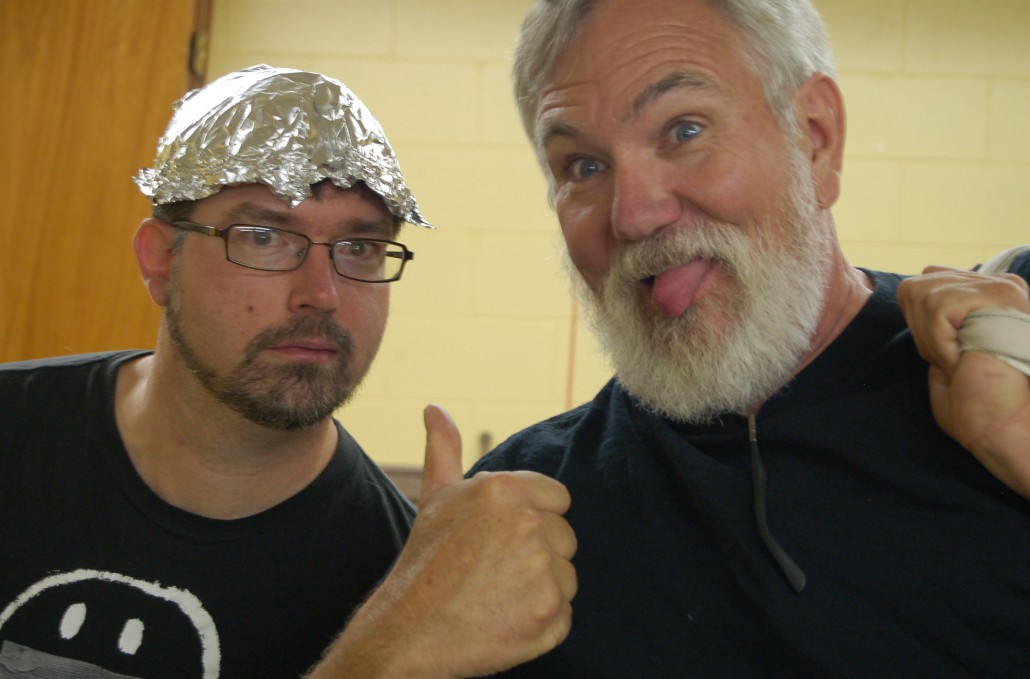
cropped-pebblecast-338.jpg

(above: this is just a picture of me being ridiculous. It has nothing to do with anything.)

*You don’t have to memorize this to pass any test.

Sentinels of Isolationism

Part of doing great accountability is helping people avoid the dangers of isolation. When we’re isolated, we can’t really progress. Now, I’ll be the first to say that too much progress is not necessarily a good thing. But when we’re truly isolated, not only are we prone to flawed-character activity (i.e. sin) but we also can’t really learn anything new from others. Anything from technology to language. We cease to communicate, and we end up like the Sentinelese: I became fascinated by the Sentinelese culture and spent an entire evening reading everything there is on the internet. Which isn’t much. Because they’re very isolated. So that’s the point.

North Sentinel Island in the Andaman Island chain contains the greatest example of an isolated culture left on the face of the earth. Numbering somewhere between 50 and 400, the inhabitants are locked in Stone Age life; it’s unclear whether they’re capable of using fire; their weapon of choice is a bow and arrow or spear, which they might be tipping with metal from shipwrecks. When intruders come for a visit the good Sentinelese people kill them. The Indian government, which recognizes them as essentially sovereign, understands their position to be one of self-defense. The last time they killed some poaching fishermen, the Indian government did nothing. As near as I can tell there has only been one exception to this rule of violence, when a group of anthropologists from India took gifts of coconut and came very close to shore.

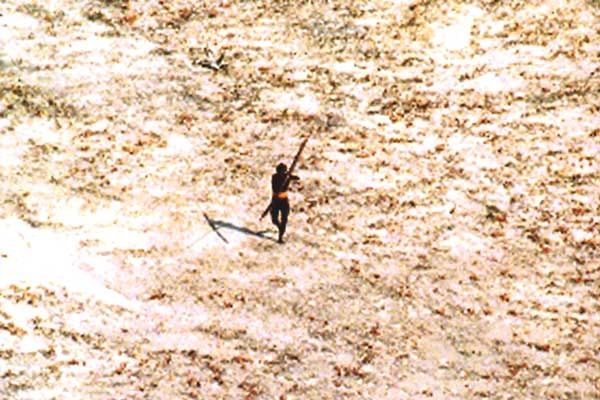
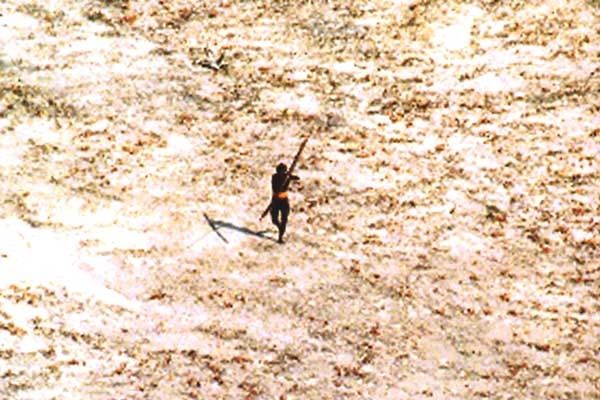
The Indian government’s official policy is that nobody is to allowed to contact the Sentinelese. For one thing, nobody can speak their language. You’re likely to be killed; in this image a Sentinel Islander dares a helicopter to land. The pilot decided against it.

1373228422-0

And you’re likely to kill them — by spreading infectious disease the Sentinelese are unable to combat.

It is incredible to me that these people have had such little contact with the outside world — for 5,000 years, minimum, some scientists think they’ve been alone on North Sentinel for 60,000 years.

I think it’s easy to idealize this primitive life. For one thing, these folks are so in tune with their natural surroundings, they appeared unharmed and unfazed when the tsunami destroyed so much in 2004. It is speculated that the Sentinelese were tipped off to the coming tsunami by something they alone would see in the waves that lap their shores. (The helicopter which took this picture was there to check and see if they were okay after the tsunami). So the language they speak with the waves and sky, the fish and trees, has a vocabulary for that. It’s also easy to idealize our technology-heavy culture. We have ships, and helicopters. We must seem to them as though aliens from another world had come to visit, perhaps to abduct them for horrible scientific procedures. Or perhaps we seem like demons. In any case, our technology doesn’t protect us from tsunamis.

The most notable thing is not whether living the Stone-Age vida loca is some sort of paradise on earth without knowledge of kindling, or whether these folks would be better off reading my blog on their Kindles. The most notable thing is their fear. Whatever else isolation has given them or taken away, they are afraid. Always afraid. Afraid in every recorded encounter. Isolation breeds fear. You don’t want to live a life of fear? Stop isolating yourself.

Double Book Review: Race in the USA

The Blind Side, by Michael Lewis: humongous poor black kid in Memphis taken in by rich white family becomes NFL player, not without trouble.

Perhaps the most fascinating part of the story has to do with the psychological and learning ability evaluation Michael Oher was given at age 18. After the age of 16 his academic efforts moved his IQ from 80 to 110. In other words, he moved from the have nots to the haves. After age 15. Also, I learned that he is very big and strong. The social implications of this story are more interesting than the sports story.

The Immortal Life of Henrietta Lacks, by Rebecca Skloot

Race and education levels in Baltimore. When a woman dies in 1951, her cells are already reproducing in labs around the country – a huge scientific breakthrough. It leads to the invention of the polio vaccine and much more. But her family doesn’t know what’s happened with her cells for over 20 years. Communication issues leave this family confused about what’s happened to their mother for fifty years.

Both books are bestsellers. The Immortal Life of Henrietta Lacks is a must-read for those who want to understand race relations. The Blind Side is a good book too, but is going to appeal to football fans more.

What’s the real value of Ten Bucks?

When I left in 1988, Congo was called Zaire, as was the river and the unit of currency. The zaires were practically worthless in ’88, but it got even worse in the 1990s.

Now, what the Congolese want is the American dollar. Well, mostly. I’m told that as a foreigner I’ll be expected to pay with VERY crisp bills. In Kinshasa, when you’re buying something that costs $5 or more, people want the good old buck. But nobody’s interested in one-dollar bills. That’s what the Congolese franc is for. I suspect that this is one way they protect their own currency from inflation. I doubt it’s policy — unless you call street value “policy”. And it is! In fact, we Americans forget so easily that a dollar does have street value, even here. We judge that street value every day when we wake up, as long as we work, sell products or services (if you work for an employer, you sell your service) and buy stuff we are judging the street value of a dollar.

I suspect that this is how people have adjusted to keep their currency from running away and hiding. Congo, one of the poorest countries, ranking all the way up at #4 on the Fragile States Index from the Fund for Peace, one of the five countries listed as “Very High Alert.” The Congolese, it appears, not only want American dollars they can trust, but they want crisp ones.

I’m told from a credible source (he was there earlier this year) that a $10 bill with a tear may only be worth $7-8. A very beat up one perhaps less. In a strange way, it makes sense. The dollar isn’t printed there, and it’s pretty hard to come up with new bills. Every time they get handled, they lose a little value. Think of it like paying for something with a car. You drive it for a few days, maybe it’s worth the same. But if you dent the fender, it might not be. The dollar used to be a piece of paper that could stand in for gold; now, a dollar stands in for a piece of paper. And newly minted paper is best. Another way to look at it is like a baseball card or any other collector’s item that’s preferred in mint condition.

Strange as it may be, I’ll be carrying the crispest bills my credit union can find. No ones, only fives, tens and twenties. I’ll be able to exchange a ten or twenty for Congolese francs on the street. They trade at about 920:1.

Weird stories involving currency: in April, a drunk Australian offered me 50 Euros for $50 cash (the Euros would get me probably $90 at my bank). Nobody wanted him to drink any more, so he wasn’t able to swing the deal. Bank value of 50 Euros, $90 (or so) and Street Value, when we don’t want an even drunker drunk on our flight makes $50 US Cash … wait for it … priceless.

Weird story 2: hearsay only! Can’t find an article online to support it! I heard about 10 years ago that the currency in Bangladesh had devalued so much that the beggars went on strike. What? That’s right. Muslims and some Hindus as well have a daily requirement to give Alms as a religious duty. They support an entire class of people: the beggars. In Bangladesh there was a standard amount (for example, $1). But that standard amount (based on percentages, if you ask enough people in the course of the day, you will earn a certain amount begging, just like selling credit card processing in the USA) was no longer enough to feed the beggars’ families, so the entire caste went on strike. People could no longer do their religious duty! It resulted in a national crisis and the president had to tell the entire nation that the standard amount was changing. You know your currency is being judged on Street value when the beggars strike!

Eephus ain’t nothing

A Philosophy of Listening

Carpe diem

One day I think in 2010 while I was volunteering at a local soup kitchen, I walked past a bookshelf full of romance novels. Serendipity means finding a book worth reading on a shelf full of romances. Nassim Nicholas Taleb’s The Black Swan: The Impact of the Highly Improbable was sitting there. I’d never heard of it before, but even the way the spine is designed said “this is not a romance novel.” So I seized the day, plucked it from the shelf, took it home, and began to read philosophy again.

In fact, I had read Why Art Cannot Be Taught by Elkins a few years before but perhaps didn’t see it as the philosophical book that it is. But the point is, since graduating college I hadn’t really engaged my brain that way. Once I read The Black Swan I had to admit to myself I was reading stuff that was a bit over my head, and from there I read Zen and the Art of Motorcycle Maintenance and so on. I began again to engage philosophy, this time in a much more serious way than I had during my undergrad years. You don’t have to have a graduate program to make yourself read.

My basic conclusion after reading Why Art Cannot Be Taught was that Elkins was correct in saying that Art cannot be taught, but incorrect in failing to offer a more excellent way to engage with art students. Coaching, I believed, and a community of authentic relationship, may not teach anyone to become a “great” artist as defined by fame or wealth. But it could help artists to become better people, more well-adjusted, less prone to isolation and even to suicide or self-medication – things which have been known to destroy artists in their prime. If you want to become an artful motivational listener, that is, if you want to listen to people and watch them walk away and succeed at attaining goals and dreams, this is a science to some extent which can be studied like the science of mixing color. Just because you can mix red and yellow to get orange doesn’t mean you can move people. Just because you can ask powerful questions, like “What do you hope to get out of this session” doesn’t mean you’re going to become the most famous or wealthy coach. But then, this isn’t necessarily the end of an art-form like listening. As Ronald Reagan said (or repeated) “There’s no limit to what you can accomplish if you don’t care who gets the credit.”

Perhaps the first thing we have to lay down to learn this art is the idea that it will somehow become a great career and that it might make us famous. (Incidentally the same goes for writing. You have to come to the place where you don’t care how much money it makes or how famous you will become – you simply have an idea or story to tell. Then you become productive.)

One of the biggest philosophical questions of all time is this: What is Truth?

As a motivational listener, you’ll be listening for that too. But not so much in the way of a judge or lawyer in a courtroom. Instead, you’re listening for the truth like a hunting guide looks for bear or cougar spoor. Yep, the old biologist’s joke is true: bear spoor happens. The real value of being a hunting guide is in recognizing the unexpected for what it is. If you were teaching people to hunt for deer in northern Indiana, where I live, you’d think it’s not so difficult to avoid the danger of becoming prey. But there have been stories in the area of bears visiting from Michigan’s Upper Peninsula. Some years ago, perhaps around 2007, I was working in Ohio and saw a newspaper article discussing the fact that several people had spotted a cougar in their backyards. A representative of the Ohio Department of Natural Resources was quoted as saying “there are no cougars in Ohio.” Now there are many current articles about cougars in Ohio woodlands. As unusual and unexpected as they may be, you would do well to recognize the signs of this animal in your vicinity – and to be able to say to yourself the first time it happens, “I know there are no cougars, but here is a cougar,” and to take appropriate action. Being able to recognize something which is highly improbable is a key component, possibility as a critical piece of truth, that takes awareness and alertness that’s worth paying for.

On the flip side there are things we may uncover as we track that could help, as we listen to people’s story, which could lead to discovery of something spectacular, perhaps even resulting in some sort of breakthrough, and dare we say, greatness. To continue with the hunting guide analogy, knowing how to find not just any buck, but the twenty-point buck; to not just locate the hole where any northern pike are hiding, but to catch a record fish.

So, the art of motivational listening, like any other art, perhaps cannot be taught. But there is one thing I can tell you: you are looking for something you do not know. This is the core idea behind Taleb’s Black Swan. The Black Swan event is “an outlier, as it lies outside the real of regular expectations, because nothing in the past can convincingly point to its possibility. Secondly, it carries an extreme impact… Third, in spite of its outlier statues, human nature makes us concoct explanations for its occurance after the fact, making it explainable and predictable. … It Is easy to see that life is the cumulative effect of a handful of significant shocks… Black Swan Logic makes what you don’t know far more relevant than what you do know. Consider that many Black Swans can be caused and exacerbated by their being unexpected.

This is what we’re looking for when we listen. Where are the handful of shocks, positive or negative? To refer to an earlier essay where I discussed the nature of the knuckleball, say for example that you are the batter, and the knuckleball pitcher makes a mistake. He throws a pitch that rotates, and the ball, rather than knuckling impossibly, suddenly becomes very hittable. The only problem is that you may be so surprised by the relative ease that you miss the pitch anyway.

Another pitch, even more rare than the poorly-thrown knuckleball, relies on the surprise. This pitch, called an eephus pitch, is served up to the batter in such a way that it is intended to be so hittable that the batter misses.

Wikipedia notes: “The delivery from the pitcher has very low velocity and usually catches the hitter off-guard. Its invention is attributed to Rip Sewell of the Pittsburgh Pirates in the 1940s. According to manager Frankie Frisch, the pitch was named by outfielder Maurice Van Robays. When asked what it meant, Van Robays replied, “‘Eephus ain’t nothing, and that’s a nothing pitch.” Although the origin is not known for certain, Eephus may come from the Hebrew word אפס (pronounced “EFF-ess”), meaning “nothing“.[2]” 

The Eephus pitch must be used with terrible infrequency – a complete outlier. The minute it becomes expected, it becomes worthless. It’s no longer a Black Swan Event. Sometimes it’s called a ball, sometimes a strike, usually makes the batter laugh, fools even the umpire, and once, Ted Williams hit a home run in the All-Star Game on an eephus pitch. Ted Williams was the kind of batter who was always ready. Ted was one of the greats.

Greatness, in terms of “no limits to what may be accomplished” is often the result of flexibly and appropriately responding to a Black Swan event when it happens. It means the ability to recognize bear or cougar spoor and get out of the woods, or being ready for the eephus pitch, that moment in which things become so easy for you to knock it out of the park that you’re likely to completely miss your chance. I think the worst thing we could do when we see the eephus pitch coming is to freeze. Better to swing away and miss than not to try at all; as Shakespeare famously said, “Better to have loved and lost than never to love at all.”

The issue becomes one of preparation. How do you seize the day if you aren’t awake? Again, the quest for not only the truth of what is now, but the truth of what might be possible even if it has never been done, seen, or thought of, is where greatness exists, and yes, it’s improbable.

All the more reason to be on the lookout for it.

How I get my Hedgerow Time

I wouldn’t be able to complete my next book without significant time in the hedgerows. To and from my local coffeehouse, or the bank, I can walk instead of drive. Often times when I walk I arrive with better thoughts to write down quickly; instead of spending eight hours in a day typing, I have to get out and move for a while.

The thinking isn’t done directly. My hedgerows, which are often just alleyways in a mid-sized Midwestern town, don’t have blackberries growing. Instead, I pick aluminum cans. Taleb points out the irony of having a valet carry your suitcases to the hotel room, and later lifting weights in the hotel’s exercise room.

Like Taleb, I cannot see the value in paying for a gym membership. Supposedly they motivate you to work out more often since you’ve committed your dollars, but this doesn’t always work for people and ends up being a profit center for the gym. Instead, I get paid to exercise and think. When I walk I pick up aluminum cans. Perhaps I look as though I’m a bum, picking up other’s trash, but there are several benefits to this method. First, of course I can cash in the cans after I accumulate quite a few, and this helps fund my non-profit’s travel budget. Second, I beautify my city. Third, like blackberries or other delicacies one might hope to find, it gives me something to keep my eyes peeled for. There’s something fun in finding that can and scooping it into my bag.

In some ways, I’m combining exercise, thinking time (space I need to be able to be creative later), cleaning up my town, and there’s even a little compensation for it.

The point is, you may not live in rural England, with its beautiful hedges and idyllic scenery. Your town may be noisy, your streets may be dirty, but practicing hedgerows is really getting yourself in shape to go to the edge of the world.

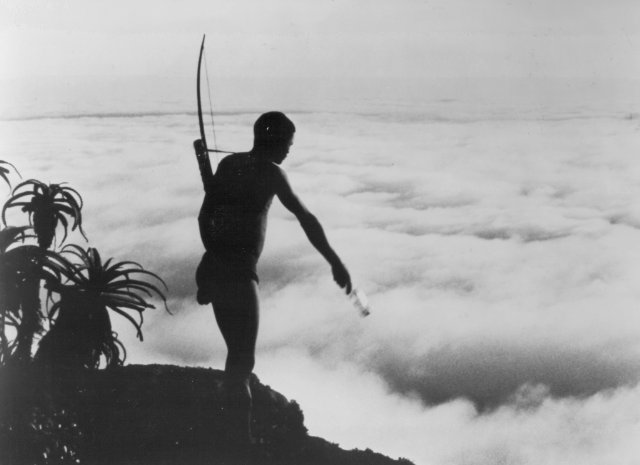
They aren’t the same thing. I think that, like Xi in The Gods Must Be Crazy, our walking may take us to the edge of the world:

Xi was angry with the gods. He shouted, “Take back your thing! We don`t want it! Look at the trouble it brought. “

The gods did not take it back.

He shouted, “You must be crazy to send us this thing! Take it back!“
Then he shouted, “Look out! Look out!“

But he spoke too late and the thing felled his daughter Dani.
Xi carried the thing away from the shelter and buried it.
That evening, there was no laughter and no chatter around the family fire.
A strange feeling of shame had come over the family…and they were very quiet.
Xi said, “I have buried the thing. It will not make us unhappy again. “
That night, a hyena smelled the blood on the thing, and dug it up.
A bad-tempered warthog chased the hyena away and it dropped the thing.
The next day, Dani found it. Her brother Toma heard her playing on it and said, “Let me try. Let me try too. “
That night the family was very unhappy. They began to talk about this thing. They did not have a name for it. They called it the “evil thing. “
Gaboo said, “Perhaps the gods were absent-minded… when they dropped the evil thing on the earth.
They`ve always sent only good things, like rain, trees, roots and berries to eat.
We are their children and they love us. But now they`ve sent this evil thing. “
Xi said, “The thing does not belong on the earth. Tomorrow I will take it to the end
of the earth and throw it off. “
Gobo said, “I think the end of the earth must be very far. I think you`ll have to walk for 20 days. Perhaps 40. “
Xi said, “I will start walking tomorrow. “

It is much harder to find the edge of the world when we haven’t been walking down the hedgerows. Will you start walking tomorrow?

Check the archives for more content on the hedgerows idea.