Writer’s Group: You get an extra week — what will you make of it?

Hey everyone. So this month we have five weeks between meetings.

We all bumped up our goals for the month, but seriously, I bet we can all beat them by a significant margin. There are still three weeks left, but don’t be like that 1600 meter runner who lags badly on lap 3 out of 4. The “third lap” on the track for the runner who is attacking the mile (metric version) is where the gap is made up. It’s easy to run a good time the first lap when fresh, and easy on the last lap when almost done. It’s what you do with the middle laps that makes all the difference. Roger Bannister got this, and the mental edge gave him the first sub-4 minute mile. Granted, he was gassed:

bannister

SO we get three middle laps this month instead of two. Stick to your pacing!

Our next group meets Oct 22 at 8 PM eastern. Drop comments on how you’re progressing!

Coming Soon To Theaters!

fireball

NOT IN THEATERS NEAR YOU, DECEMBER 2017

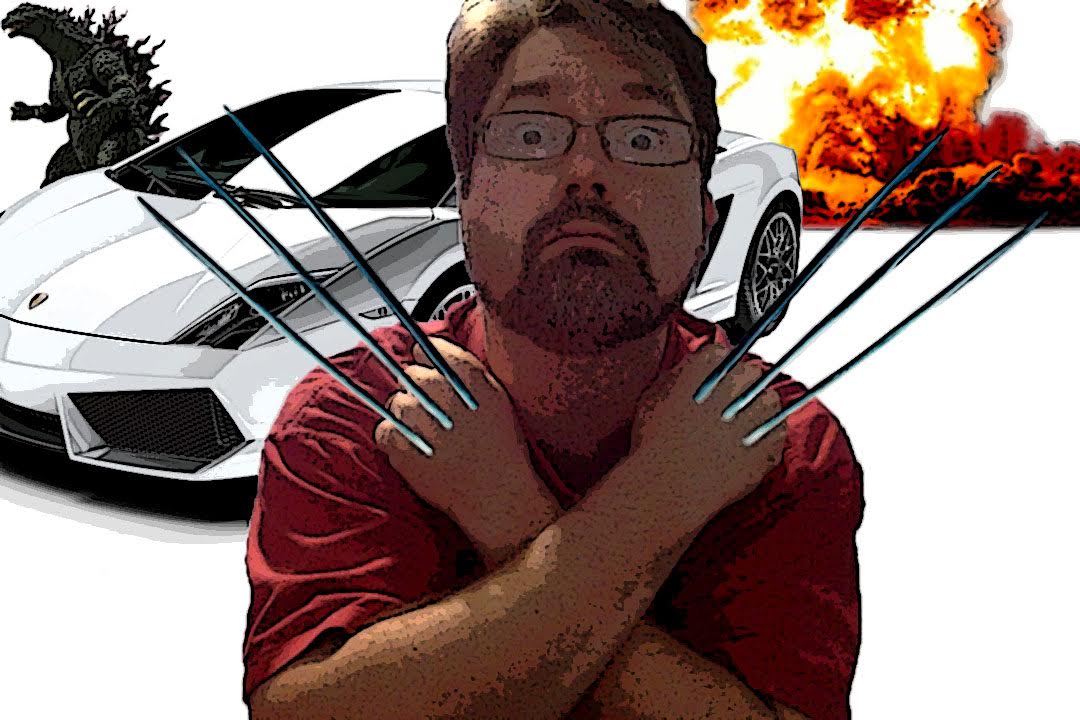
We need your suggestions for a title for this new fake movie, where I play a slightly deranged and somewhat genetically altered superhero whose team includes a magical but comically overweight Japanese dragon named Puff who has been personally responsible for 870,000 acres of forest fires across Montana and is getting chased by Smokey the Bear in a helicopter; and also a Wiry Little Italian Getaway Driver named Lil Caesar who used to drive Indy cars until a pinkie injury put him out of the action, but whose primary source of income is now flipping little porcelain figurines he buys at garage sales on Ebay with his mad hacker skills and drinking himself to death until he meets a top level espionage recruiter from a secret joint task force of the CIA and whatever Italy’s secret spy organization is called (who cares, it’s an Italian phrase you won’t remember after the movie, you’ll just remember that it was a really famous actor whose initials start with Samuel L. Jackson playing the cameo role of the spy guy who recruits other spy guys). SLJ introduces us all to each other in an underground cave thingy that’s ridiculously deep, it takes like half the movie to ride the elevator down, but thankfully they are playing Led Zeppelin instead of normal muzak and we get to talk with SLJ about how much the French would love Whitecastle’s Sliders if they had a chance to try them and how he got his eye poked out again, why does he keep doing that, doesn’t he know he shouldn’t run with scissors, and once we’ve been introduced we are led out the back entrance that is in an abandoned warehouse which is somehow not two miles deep in the earth’s crust, and we have to go through those natural squabbles that come with language and cultural barriers between an American life coach turned triple-agent, a depressed Japanese dragon exiled in Hong Kong where he doesn’t understand the culture, and an Italian thief/stuntman/hacker/ basically-not-muscly-superhero-character who wishes he could put on a few of the pounds Puff can’t seem to shed no matter how often the chubby lizard goes to Zumba. Once we reconcile those differences and see the value and gifts each one brings to the team, and realize that we can all pass ourselves off as Chinese, the three of us finally team up to blow stuff up on the Island of Sodor, where Thomas the Evil Tank Engine is rolling his obnoxious eyes at the poor screen writers until they lose the plot thread completely, which is his nefarious objective, thereby subjecting millions of action-movie fans to exactly what they came for, a movie without any real plot, but finally (spoiler alert) Thomas is dispatched by a totally anticipated and unoriginal plot twist that employs a combination of my brain coming up with a creative plan, Lil Caesar’s car-driving/hacking ability (he may just get over that pinkie injury yet!) where he drops off a letter for my Grandmother at the only mailbox left in the city which tells her where to ship my remains should I fail to emerge from the ensuing danger, and finally (back to Thomas’s lair) a massive fart from Puff who has been eating pizza with some turtles and a rat somewhere in the tunnels under New York City even though the movie is set in Hong Kong, who cares, it’s a big fireball, huzzah, we got Thomas now.

Puff isn’t self-conscious any more about his weight and Lil Caesar decides to focus on his pizza pizza delivery career and stop stealing copper pipes out of basements because with Puff around there is a spiking demand for Italian meat pies with extra cheese, even in Hong Kong. Plus Trinity seems to be pretty hot for Lil Caesar and he wants to stick around and see what happens in the Matrix when it gets rebooted. And I go back to blogging about serious topics (until next time!)

We just can’t figure out what to call this movie and we’re sure with the right title it will be a hit. At least on Redbox. The winning suggestion gets to be an extra in a really cool scene but the producer won’t let me tell you which one but I just have three little letters for you: SLJ. Good luck!

All credit to my 12 year old for the movie poster.

Congo: recent trip brings me full circle

I didn’t set out on this journey to become a life coach with a specific direction of coaching missionaries or impoverished pastors in Africa, or training coaches for cross-cultural work. It would have been around this time of year, in 2007, that I took my first short training course in coaching. Eight years ago (I was 33 years old) I don’t know that I had any solid concept of target market. Maybe I still don’t. Along the way I’ve coached entrepreneurs in the arts in the USA. I consider myself one of those (as a novelist). I’ve coached some business people who were working on figuring out or honing their life purpose. I’ve worked with people from quite a few different walks of life in the USA and now I’ve worked with clients or trainees in well over a dozen other nations, too; I’ve worked with people on every continent except Australia. I’ve even coached some penguins. (That’s not true, but if you know any professional hockey players in Pittsburgh who need a life coach have them give me a call.)

That’s not to brag about my cross-cultural exploits; in fact, the point is that it wasn’t really where I saw this whole thing heading at all. I hoped that I would coach some business people in North America at rates that would provide a lifestyle of beyond-adequate means, and that it might mean I could also afford time and energy for pro bono work; I hoped for a nice mix. That hasn’t happened, and at this point I don’t particularly anticipate that it will. It appears that I have come full circle so that the most formative part of my youth leads into the most impacting part of my life as an adult. Which makes complete, logical sense.

Showing up at MPH Guesthouse in September of 2015 was really not so much different than showing up there in June of 1987. I mean that in the physical details of the place much was the same. The open, central dining room with balcony looking over it from all four sides, from the second floor where most of the guest rooms are, the walled-in garden sprawling out behind the building with fruit trees (the mango trees probably a bit bigger than they were) and a tennis/basketball court (much more dilapidated). Everything still in the same place, comfortable in the way a church campground often is in the States. A world unto itself, a place for rest and retreat. A bubble. A place to put outgoing mail for friends in the USA, where strangers might take it by plane and deliver it to a mailbox leading to a functional postal system.

But more telling is the condition of my heart. When I arrived in Kinshasa, Zaire in 87, everything smelled foreign. Back then, it was still quite common for US Americans to embark upon missions as a lifestyle with intent to give decades of service to learning a local language and enmeshing their lives within the context of a village somewhere. We called it living a life of service, we called it living for the sake of the Gospel, we called it becoming a career missionary. But that whole idea was foreign to me, as was Zaire itself, because by the age of 13 one does not think one’s parents are career missionaries. One thinks one’s parents are exactly whatever they have been in the past; with any stability at all from one’s parental experience, one expects the stability to stay just as it is: stable. I wanted stability, not foreignness; but lapped up the experiences like a drunken boxer: slightly off kilter, just ready enough for the punches that they’d only spin me around again, rather than knock me down. A dizzying time, heady. Perhaps one might say I’ve never been completely stable since that moment we got off the plane in Kinshasa, 1987. The bubble that was MPH Guesthouse was our first stopping point, and while still a bubble, it was a bubble floating upon a foreign liquid, and when it popped, it was the last vestige of life I’d known.

As adults we learn that life is not at all static. We see places go through transformation, we see people, as well, who’ve transformed. I have a friend who kicked his alcohol habit and became a pastor. I know people who have gone through nasty divorces; some are the better for it, others still reel with the pain and devastation. Nations change too. In the USA we had the formative moment for our generation 14 years ago this month, on September 11, 2001; so formative, even, that in many ways we think of events during the span of our lives as either before or after 9/11. In Kinshasa they had their moments too — on several occasions Congo’s unpaid soldiers went on looting sprees, the first one was on 9/23/91, 24 years ago this week. Kinois, (as the residents of Kinshasa are known) still remember those days; they lived through several lootings and none of them are remembered fondly. Luckily or by the grace of God, MPH Guesthouse was not looted and remains a place of stability in the midst of relative chaos. By the grace of God, I, too, was not devastated by people or events and still stand to take on what comes next.

Now it seems that our most formative experience in our youth is often the most valuable in our calling, as we discover many years later. To be able to stand in that place where cultures collide and create, even if for an hour, some sort of bubble where people can find refreshment, is to consider my life as a cross-cultural coach is to think of myself in some ways as a living embodiment of the MPH Guesthouse itself: I create space where people who work cross-culturally can come for a moment of reflection, retreat and can prepare to go back out and take on what comes next for them. The reality is that we still have people going to live cross-culturally. Maybe we’re not sending people in the same way we did in the 1980’s, but it still happens. I have close friends about to leave for Central America. Long term. They are rarer birds, perhaps, in a jungle increasingly cut down as the world gets smaller and as people increasingly find reasons to stay where they are, but … these rare birds will need a sanctuary.

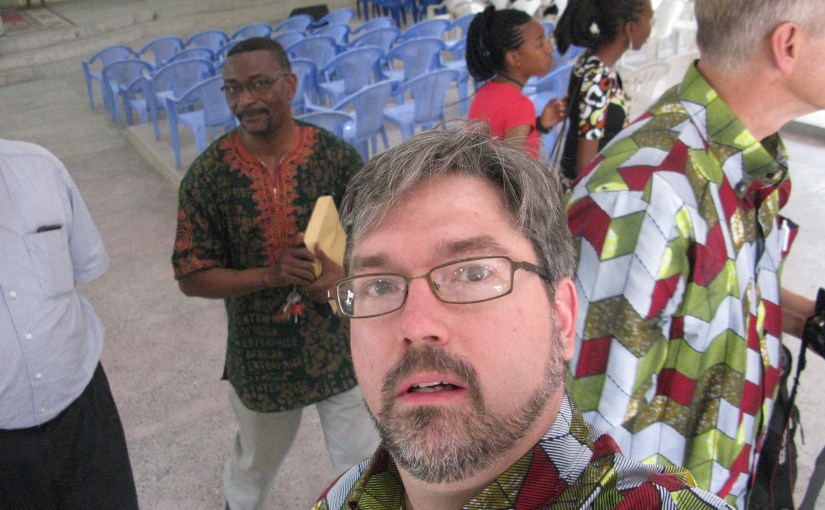
And then, too, more people are going into cross-cultural missions from homes outside the USA. The church I visited 8 days ago in Kinshasa was preparing to send a missionary to a country in northern Africa. We haven’t stopped working cross-culturally. In fact, with the advent of the Internet, we’re more able now than ever to work in cross-cultural contexts. The bigger danger is the temptation to retreat to the Internet when we wish we were at home (something I could not have dreamed of in 1987). But the Internet is not a Guesthouse; at least, not unless it is the vehicle taking you to an intentional conversation with somebody who works within your support community.

As for me, I’m making my peace with the idea that I’m a cross-cultural coach, that my calling is to work in primarily pro bono settings and that this is effectively exactly what I was designed to do, from the moment I set foot in MPH Guesthouse in 1987 until now. Coming full circle includes a recognition that the need is there, that indeed I’m already busy with it, and that it is worthy of support in its own right.
Writer’s Group: We are writing books

Just a quick encouragement for the people in our writer’s group (see writer’s group page in sidebar).

Yes. We are writing books. Last week we got an update from Justin, whose goal was 8000 words this month. He wrote 8100 in spite of duress. Tim also chimed in on his goal of 4000. He wrote about 5000. And on my goal of 10,000 I had written 14,400. 6100 of those were on my novel, which really feels like a side project while I finish The Art of Motivational Listening, but when that book is done, it’s going to feel really good to have the next novel moving along even if it’s at a fairly slow pace.

Because we are committing to write words every month, we are, therefore, indeed writing books.

If you’re in the writer’s group (next meeting is Oct 22 at 8 PM Eastern) please hit us with a comment on how the week went!

Congo: The Ancient Villagers

The joke in Congo is always “Chef du Village” which sort of refers to the village chief of course, but might be used in context of who is first in line to wash their hands before the meal or some other insignificant thing where you’re sort of the boss.

One of our trainees told a story about a time when a villager asked him a deep probing theological question he couldn’t answer (he is a theological bigwig.) When he used the word “villager” he apologized, and in the USA he might have been apologizing for calling the guy a “redneck” or perhaps a “bumpkin” or “hillbilly”. So his point was not to denigrate the villager but actually to commend his insightful question, but he didn’t have another word to describe the person’s living condition but to say “villager”.

That’s the backdrop upon which we found some pretty important contextualization for coaching in Congo: I described and demonstrated the technique where, listening carefully, I repeat back to my coachee word-for-word what he said. Not adding any analysis or interpretation of what they said, simply repeating it back: “If I understood you correctly, you said _______”.

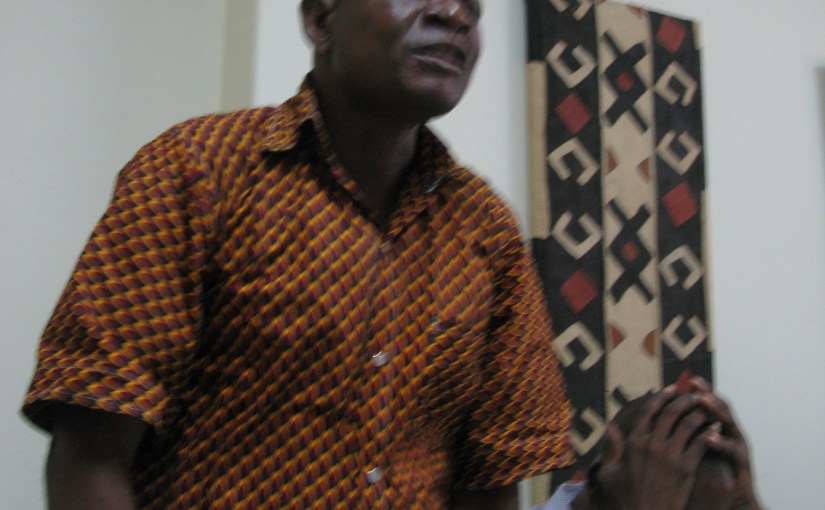
When I was done demonstrating this technique, Jacques pointed out that the Ancient Ones (Elders) in the villages had this skill down pat. In fact, it’s an aspect of oral culture that they’ve lost. It was easy for the Congolese guys to see the value in this aspect of coaching, because it’s something that, at least in the past, had value in their culture. There are aspects of wisdom that village elders have had all over the world that have been lost, or nearly so. Interesting that modern leadership techniques might revive the value for them. Something to chew on as you become a better listener today. Perhaps you’ll even become such a good listener that they’ll call you “chef du village” without any irony!

Congo Follow up — Culture Shock

On the plane ride into Chicago on 9/14 I talked with a young Congolese woman, 21 years old, on her way to the States for the first time to study at Northern Illinois University (crash course in English) with a goal of landing at Bethany Lutheran in the Twin Cities to study environmental science, with the hope of going home to give her government some ideas for how to clean up Kinshasa (smog and trash everywhere). It’s a daunting task.

Even before she lands the culture shock begins. She is given a meal but isn’t hungry. An hour later she hands the tray, untouched, back to the flight attendant. She turns to me and says “they’ll give it to the next person, right? Or will they throw it in the trash?” Sorry, kid, they’re going to throw it in the trash. In fact, you’re going to see so much waste it’s going to sicken you. We don’t leave trash all over our cities the way they do in Kinshasa, waiting for the rains to wash it down and out to the Atlantic through the Congo River, but we do waste a phenomenal amount of food. There’s no concept here of taking what’s left on your plate and giving it to a sibling or neighbor to make sure nobody goes hungry.

But after beating myself up for a while on all the crappy things Americans do (I’m grieving for her ahead of time thinking of all the ways she’ll find American hubris to disgust her) I realize that we’ve got a lot going for us, too. “I’ll get a very good education here, won’t I?” she asks; this is paramount for her. Yes, I concede, you will get an excellent education! As we cruise into Chicago I point over to the roadways, I-90 and I-294 around O’Hare airport. Immediately she sees that “they’re very well organized!”

A trip to Congo affords me the opportunity to see clearly those things in our culture that are good and bad, even though it’s only 10 days, and though it mostly entails stuff I already know.

What do I need motivation for?

I love Dan Pink’s book Drive  … his basic premise is that for great motivation we need a sense of autonomy, mastery and purpose.

I began to consider this question: what are the main things we need to be motivated for? In other words, these are things that we need someone outside ourselves listening, encouraging, supporting and holding us accountable. They must, by nature, not be things that are coming easily to us, but they must also be things that we’ll want bad enough that the outside perspective isn’t using cattle prods to get us there. Nobody can make us do it without some level of internal motivation, but on the other hand, if our internal motivation is sufficient, those items don’t really go on this list. They’re changes we’re making easily enough on our own.

Here’s my incomplete list, and I invite you to comment and add your own thoughts to the discussion. What would you add or subtract?

  1. Things we want to do with excellence
  2. Things that will take a level of endurance
  3. Unpalatable tasks we must grind though
  4. Things that will involve taking a certain degree of risk
  5. Things that will require us to practice values to which we have previously only aspired to live, but now want to live out
  6. Things that we want to be intentional about living through our work and family life, in our margins, hedgerows or sabbath time
  7. Transitional elements which are naturally exhausting

Leadership: Calm Under Fire

In 1964, a missionary-pilot named Burleigh A. Law flew a rescue mission to Wembo Nyama. (I know this story because I lived in Wembo Nyama in ’87-’88.) An eastern Congolese rebel group called the Simbas (Swahili for “lions”) had captured the town; they had been killing Congolese and foreigners alike, raping nuns, and allegedly even cannibalizing their victims on some occasions as they swept across eastern and central Congo. Law knew that other missionaries on the ground were in very real danger and he hoped to evacuate them, so he flew overhead and dropped a note. “Stand if it’s not safe to land,” he said, “Sit down if it is safe to land.”  The missionaries who retrieved the note stood as he flew over again. It is not safe to land. Law landed his plane anyway. He was shot and killed by one of the rebel fighters before he could even turn off the plane’s engine.

A friend of mine who is chief of police in a rural township told me once that the reason firemen are often killed is not for lack of training—it’s usually for lack of respect for that training, fueled by a desire to be a hero. His men are often factory workers and farmhands with little other chances at glory (their high school football days behind them) and he worries that they’ll ignore their training precisely because they hope to be that hero. Their odds are low at heroism: for every fireman who emerges a hero from a situation they shouldn’t have gone into, many more lose their lives for the same reason. Risks are calculated for a reason.

“You know, you send people into war zones, you send people into dangerous situations and into riots, and you worry that they are going to get hurt. … You send somebody out to do a story on tourism and — how can you expect something like this to happen?” Jeff Marks, Station Manager, WDBJ, Roanoke, VA, quoted in an article on CNN.com by Elliott C. McLaughlin and Catherine E. Shoichet, 8/27/15.

Marks said this in response to the shooting that killed two journalists, Alison Parker and Adam Ward, just yesterday (this article was drafted 8/27/15).

In his book The Black Swan: The Impact of the Highly Improbable, Nassim Nicholas Taleb identifies a key issue for leaders that Jeff Marks is today all too aware of: you simply cannot expect the unexpected. You can make all kinds of plans for any number of contingencies, and that’s important, but the fact that something is unexpected and improbable is precisely the reason that it’s impactful.

A friend of mine runs a business that trains emergency personnel and police in deescalating violence. His consulting firm worked with Newton, CT, before the tragic shooting there, and in the wake of their tragedy, the responders won national recognition for their excellent work during the tragedy. Perhaps they saved lives. It’s always hard to say. His firm has been working with Ferguson, MO, police since the resignation of Chief Thomas Jackson in March of this year. Jackson stepped down after a particularly incriminating report from the Justice Department which found that “Ferguson’s law enforcement practices are shaped by the City’s focus on revenue rather than by public safety needs. This emphasis on revenue has compromised the institutional character of Ferguson’s police department, contributing to a pattern of unconstitutional policing…” (report, p.2.)

Let’s talk about leadership. God willing you’ll never be under fire in any physical sense. But, whether large or small, unexpected things are bound to happen to your business or organization. You won’t really know the nature of your own ability to remain calm under fire until they happen.

  • From Burleigh Law’s death, we can learn to be prepared to listen to the warning signs. Ask your people for signals, and listen to them. “We should not buy this machine, we can’t afford the debt” or “we must take care of this customer no matter what it costs, they are threatening to take their discontent to the internet.” There’s a fine line between courage and stupidity. Know where the line is, and respect it; listen, listen to your people on the ground. That line is the line of humility, and it preserves you.
  • From the deaths of Parker and Ward, we are only reminded that unexpected means just that. You won’t be able to avoid the unexpected. You can prepare and train your staff for contingencies, but not for everything. “Expect the unexpected” is a nonsensical lesson. Be prepared for what you can reasonably prevent, then be prepared to offer kindness to victims of tragedy around you. (How will you treat your employees if your primary buyer goes out of business?)
  • From Chief Thomas’ story, I can only say, be just; it’s the best way to prepare for a moment when you need to de-escalate violence. On the far side of injustice you’ll only find disgrace.

An ancient book tells us what is good: to do justice, and to love kindness, and to walk humbly with your God. That doesn’t mean you’ll be able to dodge evil, or even the unexpected snafu. But the courage to do those three basic things under fire will make you a great leader. The impact of the improbable can be a good thing, too, when the impact is positive – so go be improbably great, and you’ll make an impact to the positive that has longer lasting power and touch more people for the good than any of these negative events I mentioned will ever accomplish for the sake of evil.

Long Voyage Ahead

The invitation stands to come back to Congo again. When? Who knows. We can hope it will be as soon as next year.My bags are packed and in 90 minutes or so the company called “Jeffery Travels” will send a minivan to take me and Bill to the airport. We anticipate a two hour traffic jam followed by three hours at the airport, multiple checks of our baggage, and I’ll be back in the friendly skies by 10 PM.

On the way here I enjoyed the sparse scenery of the Sahara Desert and the Alps around Geneva, Switzerland, caught a few glimpses of Belgian Countryside on the way into Brussels, and saw Brazzaville and the Congo River at dusk.

Bill will be flying on a different airline, so my homeward bound adventure may not consist of much besides watching a movie or two, listening to a book on Kindle, and eating weird things. My health has been good almost the entire time (my stomach didn’t feel to great yesterday) and I’ve really enjoyed the people I worked with.

We’re just short of the rainy season, I think if we stayed another week I’d probably get rain, even now we feel the humidity beginning to come on.

What’s next? I guess we’ll find out pretty soon because I don’t have a whole lot lined up. I hope to be able to coach a few of these Kinois as I’ve been training them, and we’ll just have to see about the rest.